


Two-day training-cum-skill development programme on cultivation of medicinal plants begins in Leh
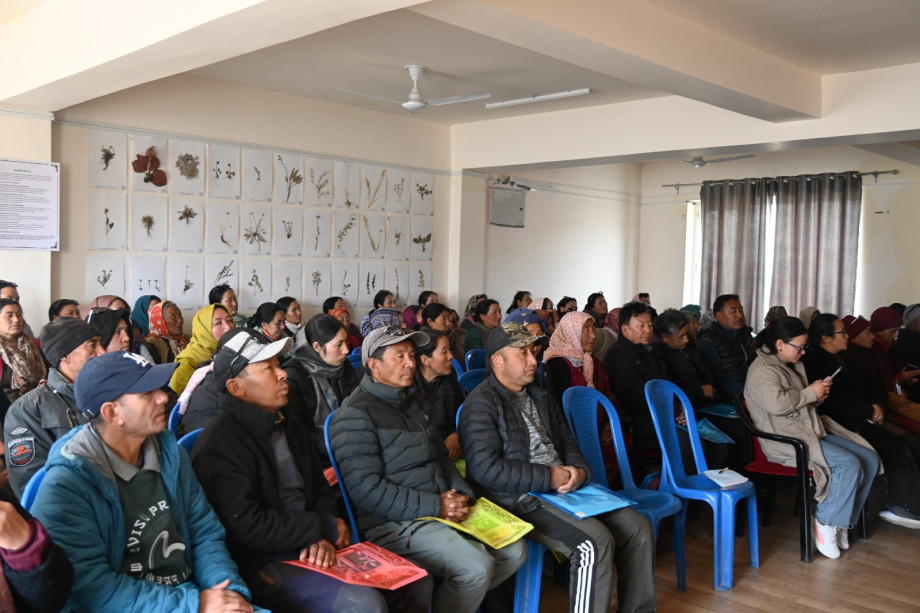
A two-day Training-cum-Skill Development Programme on the cultivation of medicinal plants commenced at the Trans Himalayan Herbal Garden of the National Institute of Sowa Rigpa (NISR), Leh, on March 23.
The programme was organised by the State Medicinal Plant Board (SMPB), Union Territory of Ladakh, in collaboration with the National Institute of Sowa Rigpa. It witnessed enthusiastic participation from over 80 attendees, including Amchis, farmers, and other stakeholders interested in medicinal plant cultivation.
Dr. Dorji Galchan, Consultant, SMPB, highlighted the objectives of the programme and emphasized the importance of medicinal plants in sustainable healthcare and livelihood generation.
Dr. Tashi Thinlas, Director Health Services/AYUSH and Chief Executive Officer, SMPB, elaborated on the role of AYUSH systems in promoting traditional medicine and encouraged participants to adopt scientific approaches to medicinal plant cultivation.
Dr. Padma Gurmet, Director, National Institute of Sowa Rigpa, spoke on the significance of the Sowa Rigpa system and stressed the need for conservation and cultivation of medicinal plants, particularly in the fragile Himalayan ecosystem.
The session also featured the unveiling of a calendar by the State Medicinal Plant Board, aimed at promoting awareness about medicinal plants.
Dr. Tsewang Rinchen delivered a lecture on the cultivation of medicinal plants, providing insights into the diversity and importance of medicinal flora in high-altitude regions. Skalzang Lamo presented on the significance of ethno-medicinal plants and cultivation methods in cold desert regions, highlighting the integration of traditional knowledge with scientific practices.
A guest lecture was delivered by Amchi Sonam Tundup on Carthamus tinctorius (Palkur), focusing on its uses and cultivation techniques.
The programme also included the felicitation of speakers in recognition of their contributions. A hands-on session on the cultivation of Carthamus tinctorius (Palkur) provided participants with practical exposure, followed by a field visit for on-site learning.
An open discussion (Q&A session) was held, during which participants actively interacted with experts, clarified doubts, and shared their experiences.
-
 Reach Ladakh Skara Yokma, Airport Road, Near Councillor Quarter, India.


© 2018 Reachladakh. All rights reserved.
Web designs By : India Internet