


Three-day Zanskar summit ends with focus on sustainability and inclusive growth
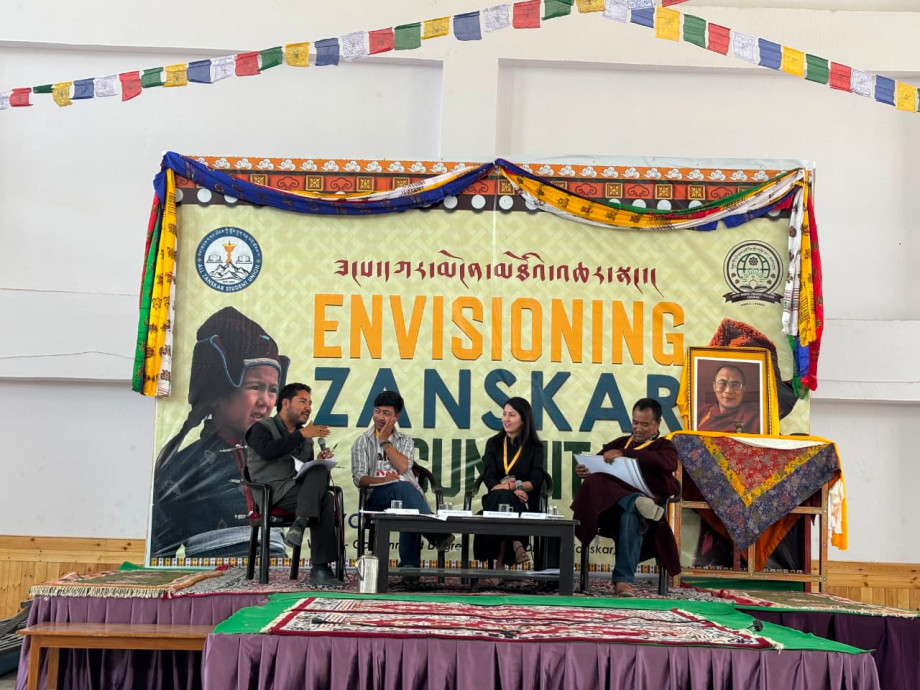
The three-day Envisioning Zanskar Summit 2026 concluded on July 9 at Government Degree College, Zanskar, with insightful lectures, engaging panel discussions and a valedictory session reaffirming the collective commitment towards building a sustainable, inclusive and resilient future for the region.
The summit brought together academicians, policymakers, entrepreneurs, development practitioners, environmental experts, civil society members, students and local stakeholders to deliberate on key issues shaping Zanskar's future.
The final day's proceedings began with an online session by Sonali, who spoke on women's health, menstrual hygiene and women empowerment. She introduced Bionap, an eco-friendly sanitary pad initiative designed to promote safe, affordable and sustainable menstrual hygiene. Highlighting its environmental benefits, she noted the initiative's growing acceptance across communities.
This was followed by a presentation by Kanika Dihani, who shared the journey of Acheley Block Printing in Leh. She highlighted the enterprise's work in sustainable textile production, livelihood generation and environmentally responsible manufacturing, demonstrating how locally driven businesses can preserve traditional craftsmanship while creating employment and supporting sustainable economic development.
The first panel discussion, "Zanskar at a Crossroads: Balancing Development and Environmental Sustainability," was moderated by Dr. Mohd Salim, Assistant Professor, Department of Environmental Science, Government Degree College Zanskar. The discussion featured Dr. Tsewang Namgyal and Lobzang Namtak.
The panel examined the challenge of balancing developmental aspirations with ecological conservation in the fragile Himalayan ecosystem. The speakers stressed sustainable water management, biodiversity conservation and responsible utilisation of natural resources, while highlighting the growing impacts of climate change, unplanned development, increasing tourism and other human interventions on the region's ecology. The session concluded with an interactive discussion with participants.
The second panel discussion, "Entrepreneurship Rooted in Culture and Nature: A Path for Ladakh's Future," was moderated by Dr. Jigmet Zazay, Assistant Professor, Department of Zoology, Government Degree College Zanskar. Panelists Rinchen Angmo, Thinles Norbu, Tsetan Dorjey and Diskit Angmo shared their entrepreneurial journeys and discussed opportunities in eco-tourism, handicrafts, sustainable agriculture, local food processing and creative industries.
They encouraged the youth of Zanskar to become job creators by building enterprises rooted in local culture, indigenous knowledge and natural resources while ensuring environmental sustainability and economic viability.
The third panel discussion, "Zanskar in Transition: Building a Sustainable and Responsible Tourism Model," was moderated by Dr. Amjad Ali Abassi, Principal, Government Degree College Zanskar, with Rigzin Wangmo, Lhundup Dorje and Tenzin Mutup as panelists.
The discussion focused on developing a tourism model that balances economic opportunities with environmental conservation and cultural preservation. The speakers advocated community-based tourism, responsible visitor behaviour, improved waste management, preservation of cultural heritage and equitable distribution of tourism benefits among local communities.
The fourth and final panel discussion, "Zero Waste Future: Sustainable Solutions for Zanskar and Ladakh," was moderated by Dr. Mohd Salim. The panel featured Eshey Tondup, Director, LEDeG; Mipham Jigmet; and Dr. Tsering Konchok.
The experts discussed practical strategies for reducing waste generation through segregation, recycling, circular economy practices, community awareness and sustainable consumption. They emphasised that environmental conservation must remain central to all developmental initiatives and called for collective action by government agencies, educational institutions, civil society organisations and local communities. Following the session, all panelists were felicitated with traditional khataks and commemorative mementoes.
The summit also featured an inspiring lecture by Tashi Chosgon on "Digital Responsibility: Empowering Ethical Content Creators." He urged young people to use digital platforms responsibly by creating authentic, ethical and constructive content that positively showcases Zanskar's culture, heritage and aspirations.
The valedictory session was attended by Superintendent of Police, Zanskar, Rigzin Sandup (JKPS), who appreciated the efforts of the All Zanskar Students' Union and Government Degree College Zanskar for successfully organising a multidisciplinary summit addressing a wide range of developmental issues.
He observed that bringing together experts from diverse fields for meaningful dialogue was a significant achievement and described the summit as an important platform for collaborative thinking and knowledge sharing. He emphasised that such initiatives are vital for building an environmentally sustainable, socially inclusive and economically prosperous future for Zanskar.
The three-day summit concluded with meaningful deliberations, collaborative dialogue and visionary discussions. The organisers said the summit reaffirmed the collective resolve of all stakeholders to work together towards sustainable development while preserving the ecological integrity, cultural heritage and unique identity of Zanskar for future generations.
-
 Reach Ladakh Skara Yokma, Airport Road, Near Councillor Quarter, India.


© 2018 Reachladakh. All rights reserved.
Web designs By : India Internet