


Secretary (IT), UT Ladakh visits NIELIT Leh; reviews student innovations and R&D initiatives
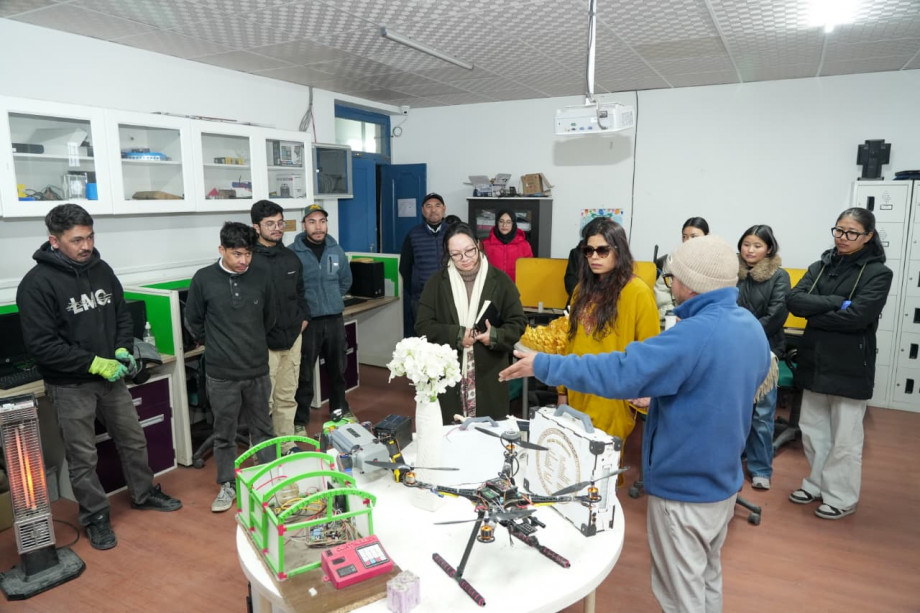
Secretary, Information Technology, UT Ladakh, Shashanka Ala visited the National Institute of Electronics and Information Technology (NIELIT), Leh, on December 30, and reviewed the institute’s academic infrastructure, laboratories, and research and development initiatives, with a special focus on student innovation and capacity building.
During the visit, the Secretary inspected various facilities, including AI laboratories and smart classrooms, and interacted with students and faculty members. She was briefed by NIELIT officials on the institute’s academic programmes, internship initiatives, and its live project-based learning model.
Officials informed that NIELIT annually engages students from Leh and Kargil districts as interns for a six-month duration, during which they work on live projects and receive certificates of appreciation upon successful completion.
The Secretary was showcased a wide range of innovative products and prototypes developed by students as part of their training and R&D activities.
These included initiatives aimed at digitising traditional Ladakhi practices and products, such as smart thermos systems; electric and solar-based solutions; AI-enabled robots capable of responding in the Ladakhi language; 3D paintings; solar charging lights; solar vehicles; drones; greenhouse meters; laser machines; and several other technology-driven solutions. She also visited the institute’s R&D and capacity-building sections, appreciating the depth and diversity of student-led innovation.
Shashanka Ala lauded the creativity and technical skills demonstrated by the students and emphasised the need to encourage greater participation from students outside Leh, particularly from remote areas, in innovation-driven programmes.
She further stressed that such student innovations should be supported not only for academic excellence but also through market linkages, product showcasing, and collaboration with government departments and institutional platforms, which would enhance the scalability, credibility, and real-world impact of these initiatives.
-
 Reach Ladakh Skara Yokma, Airport Road, Near Councillor Quarter, India.


© 2018 Reachladakh. All rights reserved.
Web designs By : India Internet