


International Buddhist Confederation hosts international conference on Himalayan Buddhism in Leh
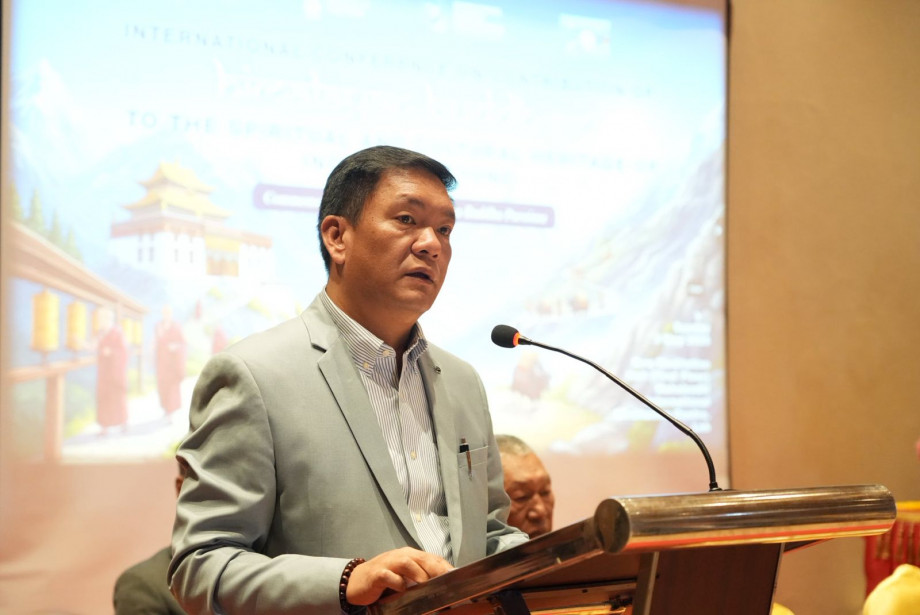
The International Buddhist Confederation (IBC), in collaboration with the Mahabodhi International Meditation Centre (MIMC), organised an international conference in Leh on May 3 on the theme, “Contribution of Himalayan Buddhism to the Spiritual and Cultural Heritage of India and Beyond,” marking the auspicious occasion of the 2569th Vaishakha Buddha Purnima.
Held at the Mahabodhi International Meditation Centre, Leh, the conference witnessed the participation of eminent scholars, spiritual leaders, policymakers, and practitioners from across India and abroad.
The event commenced with a traditional Mangalapath recitation by venerable monks, followed by the ceremonial lighting of the lamp and the launch of an IBC documentary titled “Ladakh – The Land of High Passes.”
Chief Guest Pema Khandu, in his address, emphasised the cultural and spiritual significance of Himalayan Buddhism across regions such as Arunachal Pradesh, Sikkim, Himachal Pradesh, and Ladakh. He highlighted the importance of such conferences in strengthening cultural bonds among Himalayan communities and fostering global connections rooted in shared traditions.
He noted that despite the challenges of living in harsh terrains, the people of the Himalayas remain deeply connected to their identity, culture, and spiritual heritage. He also underlined the enduring influence of 14th Dalai Lama in nurturing unity and compassion. Stressing the relevance of the Buddha’s teachings in today’s conflict-ridden world, he called for promoting peace, harmony, and unity beyond borders.
Khandu further elaborated on initiatives undertaken by the Government of Arunachal Pradesh to preserve Buddhist heritage, including the restoration of ancient texts and monasteries, and reaffirmed his government’s continued support to Ladakh.
Guest of Honour Thuksey Rinpoche spoke on the relevance of Buddhist teachings in the 21st century, emphasising the cultivation of inner peace and addressing challenges such as anger, desire, and hatred through the practice of Dharma. He highlighted the need for collective responsibility in preserving this living tradition and called for guidance and collaboration to empower the youth.
Dorjey Stanzin, President of the Ladakh Gonpa Association, highlighted the role of Buddhist institutions in promoting peace, compassion, and unity, noting that such conferences provide vital platforms for enhancing understanding of Himalayan Buddhism.
Similarly, Chering Dorjay Lakruk elaborated on the historical evolution of Buddhism in Ladakh, particularly along the Silk Route, where trade facilitated the exchange of religious ideas and cultural practices. He also underscored the importance of monasteries as centres of learning, meditation, and conflict resolution, along with traditional art forms such as thangka painting, Buddhist literature, and the Sowa Rigpa healing system.
On the occasion, a book titled “The Living Legacy of the Tathagata,” compiled by Dr. Thupstan Norboo and Lhundup Gyalpo, was released by the Union Territory Administration of Ladakh.
Bhikkhu Sanghasena, President of MIMC, expressed gratitude to the Union Territory Administration of Ladakh, the IBC, and all supporting agencies for organising a series of events during the 15-day exposition of Buddha relics in Leh. He acknowledged the contributions of the Tourism Department and other stakeholders, while emphasising the continued importance of spiritual guidance in an increasingly technological world.
The conference also featured thematic sessions on key dimensions of Buddhist studies, culture, and heritage. The first session, “Preservation of Ancient Heritage,” was moderated by Prof. Rajesh Ranjan and included speakers from Bhutan, India, and Germany.
The second session, “Cultural and Artistic Innovation,” was chaired by Lama Ugyen Wangdi Rinpoche and brought together participants from India, Nepal, and the United Kingdom. The third session, “Intellectual and Ethical System,” was moderated by Lopen Lungtaen Gyatso and featured speakers from prominent academic and spiritual institutions.
A special address on spiritual tourism and its global significance was delivered by Sanjeet Rodrigues, Secretary, Tourism and Culture, UT Ladakh, who highlighted the region’s potential as a global hub for spiritual and cultural tourism.
-
 Reach Ladakh Skara Yokma, Airport Road, Near Councillor Quarter, India.


© 2018 Reachladakh. All rights reserved.
Web designs By : India Internet