


Chief Secretary chairs consultative meeting on Nautor Land Rules in Leh
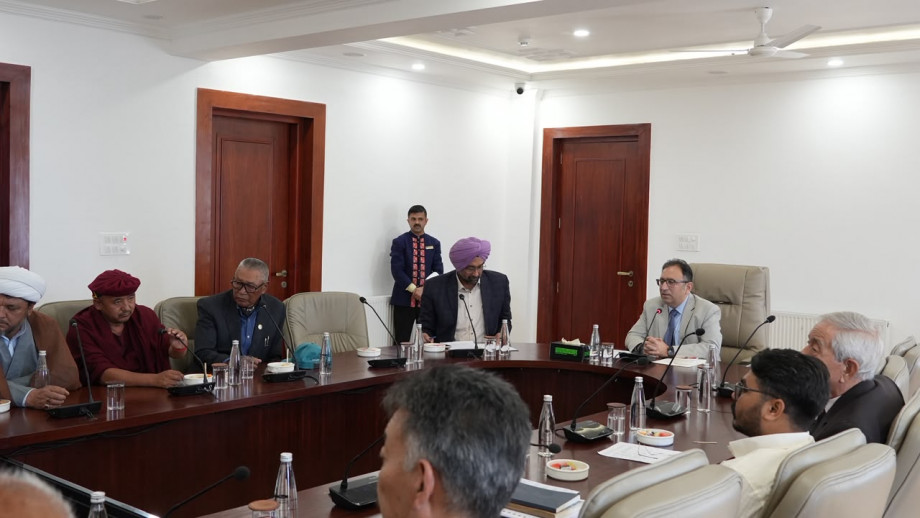
Chief Secretary, Union Territory of Ladakh, Ashish Kundra on September 16 chaired a consultative meeting with prominent citizens, former public representatives, subject experts, religious leaders and representatives of socio-religious organisations and political groups to deliberate on issues concerning the Ladakh Autonomous Hill Development Councils (Nautor Regularisation) Rules, 2026.
The meeting was convened to seek wider public and stakeholder views on the Nautor framework, particularly with regard to regularisation of eligible historical occupation, tenancy and proprietary rights, land-use regulation, field verification, eligibility criteria and the role of the Ladakh Autonomous Hill Development Councils (LAHDCs).
Divisional Commissioner Ladakh, Shubhir Singh, briefed the participants on the key provisions of the Nautor Rules, including the categorisation of Mustaqil and Gair Mustaqil tenancy, verification of eligible occupation, the prescribed cut-off date and the provisions relating to proprietary rights and leasehold arrangements. He also explained the procedure for verification and processing of eligible cases by the concerned revenue authorities and the LAHDCs.
During the extensive consultation, participants raised several issues relating to the historical nature of Nautor land, tenancy and ownership rights, old allotments, agricultural and pastoral land, land in remote and nomadic areas, and cases where historical occupation may not have been adequately reflected in revenue records.
Concerns were also raised regarding land associated with monasteries, mosques, schools and other religious and community institutions.
Stakeholders sought greater clarity on the transition from tenancy or occupancy rights to proprietary rights, land-use conversion, regularisation charges, leasehold provisions, eligibility of existing occupants and safeguards against misuse or encroachment. Participants also emphasised the need for adequate field verification and greater awareness among residents, particularly in rural and remote areas, before implementation of the framework.
Representatives highlighted the importance of protecting genuine historical occupants while ensuring that agricultural, pastoral and environmentally sensitive land is not diverted in an unregulated manner. Suggestions were also made for ensuring that the framework remains practical, transparent and responsive to the specific historical and geographical circumstances of Ladakh.
Chief Secretary Ashish Kundra said that the Administration is examining the Nautor issue with the objective of providing a clear, transparent and legally sustainable framework for addressing genuine historical cases while safeguarding public land and regulating future land use.
Chief Secretary Ashish Kundra said the Nautor framework would provide greater legal clarity to eligible historical landholders, facilitate productive use of agricultural land and enable access to institutional credit, including bank loans, subject to applicable norms. He said the framework would also help address longstanding historical and revenue-record issues relating to Nautor land.
He assured the participants that the suggestions and concerns raised during the consultation would be examined by the concerned revenue, legal and administrative authorities. He emphasised that the Administration would continue consultations with stakeholders and undertake necessary examination and refinement of the framework before its further implementation.
The Chief Secretary stated that the Nautor issue has important historical, livelihood, agricultural and socio-economic dimensions and therefore requires a balanced approach based on legal provisions, revenue records and ground realities. He reiterated that the interests of genuine occupants and the broader public interest would be duly considered while finalising the implementation framework.
The meeting was attended by former CECs and MLAs of LAHDC Leh, former councillors, retired revenue and administrative officers, representatives of the Ladakh Buddhist Association, Anjuman Imamia Leh, monasteries, Christian communities and other stakeholder organisations.
The Chief Secretary also briefed the gathering on the ongoing discussions concerning the broader administrative and constitutional framework for Ladakh. He informed the participants that discussions between representatives of the Apex Body Leh and Kargil and the Ministry of Home Affairs are continuing and that various demands and issues concerning Ladakh are under examination at the appropriate level.
-
 Reach Ladakh Skara Yokma, Airport Road, Near Councillor Quarter, India.


© 2018 Reachladakh. All rights reserved.
Web designs By : India Internet