


33 e-buses sanctioned for Ladakh in major mobility push Centre clears eco-friendly fleet to boost public transport and connectivity
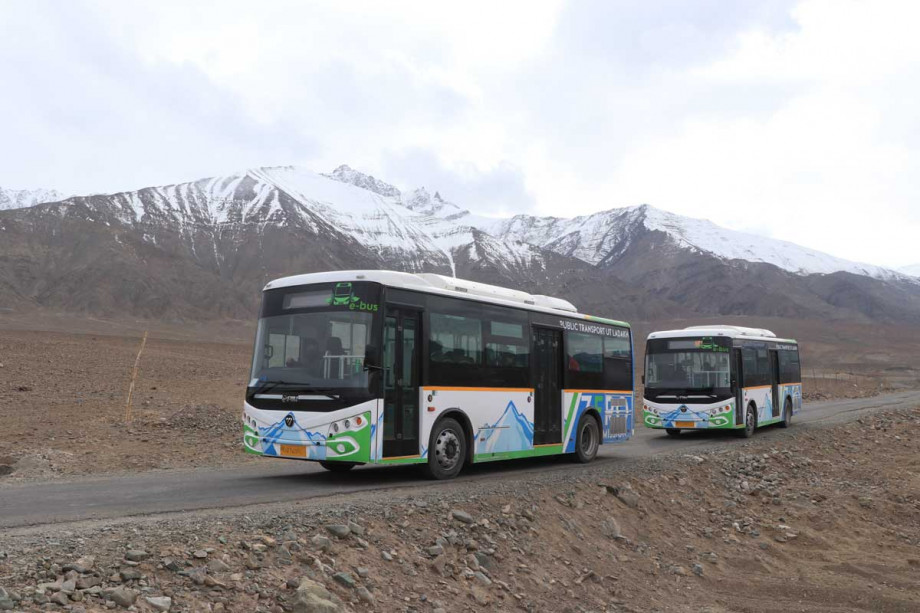
In a significant boost to public transport and sustainable mobility in the Union Territory of Ladakh, the Government of India has sanctioned 33 electric buses under the PM-eBus Sewa scheme.
The fleet will comprise 7-metre electric buses; specifically designed to suit Ladakh’s challenging terrain and road conditions. The initiative is expected to transform public transport in the region by promoting clean energy, reducing pollution, and enhancing the overall travel experience. Officials said the delivery of the e-buses is expected within a month.
Lieutenant Governor Vinai Kumar Saxena thanked the centre for fulfilling the long-pending demand and termed the move a major step towards sustainable development in the region.
“The sanctioning of electric buses marks a significant step towards building a sustainable and environmentally friendly public transport system in Ladakh. It reflects our commitment to preserving the fragile ecosystem while improving connectivity and accessibility. These buses will reduce carbon emissions and provide an affordable and efficient mode of transport for residents,” he said.
The initiative aligns with the vision of Prime Minister Narendra Modi to promote sustainable development and move towards a carbon-neutral Ladakh.
The deployment of e-buses is expected to significantly reduce carbon emissions in the ecologically fragile Trans-Himalayan region. Their compact 7-metre size makes them suitable for Ladakh’s geography, ensuring smoother and more efficient mobility across difficult terrain.
In addition to environmental benefits, the new fleet will offer an affordable and reliable transport option, particularly benefiting residents in remote and far-flung areas, thereby strengthening the public transport network.
Since assuming office, the Lieutenant Governor has been actively promoting eco-friendly initiatives aimed at preserving Ladakh’s pristine environment.
The UT Administration has prioritised reducing dependence on fossil fuels through measures such as electric mobility and solar energy adoption.
-
 Reach Ladakh Skara Yokma, Airport Road, Near Councillor Quarter, India.


© 2018 Reachladakh. All rights reserved.
Web designs By : India Internet