


Trend of AI music in Ladakh: Convenience or Hindrance?
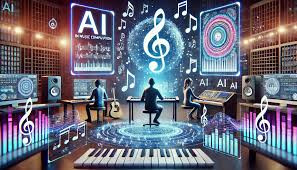
The last spring of apricot blossoms brought a wave of new beginnings and admirers from all over the world to appreciate Ladakh’s white and pink blooms. Along with it came something unusual: a bright spring song, “Chuli Mentok”. What seems to be a summerly song about the springs of Ladakh sparks interest of the public, as it is an AI-covered song with vocals and melody being completely prompted. While some aren’t even aware of the difference, the other half is aware, and it sparked some jumbled reactions.
Recently, a wave of AI-generated music has taken over Ladakh. Some are new creations, but most seem to be a cover or reimagined composition of already existing, well-known Ladakhi classics. While some may argue that AI is merely a convenient tool for music, the accurate pronunciation has either impressed people or unsettled them deeply. Since the imitation of such a niche language as Ladakhi, it can be concluded that the AI bots are trained or at least instructed to analyse the work of real artists of the given songs, or even fed the data sets of existing Ladakhi artists with no compensation in return for the data it sources from their art.
Furthermore, AI has achieved a decent amount of precision for a relatively underrepresented language, such as Ladakhi. This raises an ethical concern first-hand about the authenticity of the outcome, not to mention the environmental and cultural considerations. Not just in Ladakh, but globally as well, there has been a trend of AI-generated music and art. This has sparked a debate worth dwelling upon to comprehend the nuances of involving AI in a sector like arts and literature that is considered to be so humane and soulful.
The candid reality of the present day is clear: AI is here to stay. No matter the number of supporters or critics it gains, the technology’s grasp doesn't seem to loosen with time at all. From being incorporated in healthcare to educational sectors, to even our everyday lives, Google searches and entertainment sources, it is integrated deeply, and its positive assistance is undeniable. The dilemma isn’t about the existence of AI anymore but the way society decides to interact with it. With fruitful advantages, AI bears the capability to cause malicious consequences. The present-day concern and debate revolves around whether an imitation of life built on prompts and existing databases can really be as pleasant as the music we enjoy from real artists. People often try to find themselves in the music they enjoy, whether it be a retro classic song they listen to or a local band performing. Music most of the time isn’t just beats and chords for a computer to copy, but an expression of human emotions, vulnerability and relative struggle.
While some find it strongly repulsive and dystopian, supporters argue it is just another tool to expand human creativity and make it accessible.
AI has its legitimate base of criticism and disapproval, but several other technologies that changed the artistic realm were met with criticism and suspicion. For instance, when photography was invented, it was viewed down upon, assuming it would replace paintings and hand-drawn portraits, but that wasn’t the case. Supporters argue that AI would also be viewed as just a mere tool that society will soften up to with time. But the main difference is the journey and struggle behind a creation. The first camera to be created was a simple box pinhole camera, and it took decades of time and development to achieve the first photograph. It contained patience and human struggle behind it to become a tool of art. AI has infiltrated our lives in barely a few years. In addition to the topic, it is important to know the perspective of artists themselves. Quoting Mr Vishnu N. Agarwal, a passionate miniature painting artist, he says that when he paints, he adds a part of himself into it. He believes that an artist’s patience and dedication to their art are crucial in their life.
An artist’s life is bound to be filled with struggle, and when that struggle hones their skills and sources inspiration, then it finally transforms into a story in the form of painting, music, movies and literature. This opinion seems to resonate with most of the artists who create art authentically, in Ladakh and globally as well.
Prior to that, AI, despite existing in a digital realm, seems to leave a remarkable digital footprint environmentally as well. The data centres for AI consume a substantial amount of clean water and electricity for cooling. In a fragile ecosystem like Ladakh, committed to sustainability and reliant on glacial water, it is contradictory to rely on a technology that is feeding on water elsewhere and drying the land scarce of its resources. While AI isn't the only source of water depletion, critics believe that continuous consumption of resources for a technology being used recklessly deserves attention.
Ultimately, it is concluded that AI isn’t avoidable anymore, and it has its advantageous points, but using it and involving it in creative spaces might seem fascinating, but it has to be thought out thoroughly and consider its cultural, environmental and social outcomes. Whether it’d be worth indulging in prompted creations for mere interest at the cost of our resources, and most of all, the risk of losing human touch.
-
 Reach Ladakh Skara Yokma, Airport Road, Near Councillor Quarter, India.


© 2018 Reachladakh. All rights reserved.
Web designs By : India Internet