


In Converstion with Muzammil Hussain | Co-Founder, Roots Ladakh • Founder Trustee & Principal Director, Himalayan Brown Bear Trust
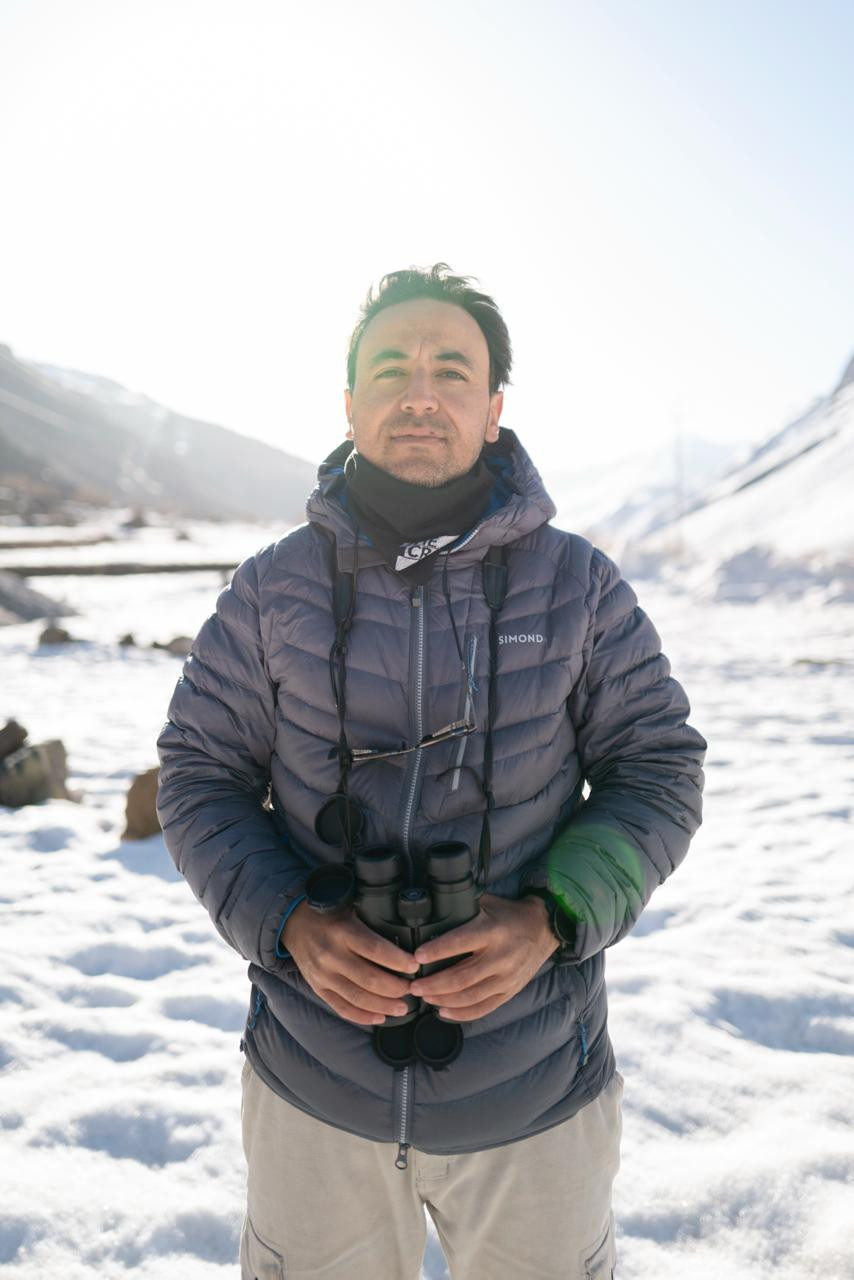
Q. Tell us about your journey from leaving Kargil during the 1999 war to returning and working for its people and identity.
I was thirteen, in the 7th grade, when the Kargil war broke out in 1999. Like many families in Kargil, my parents felt the safest thing was to send me away to keep my education going. At that age, I obviously didn't understand the larger implications of what was happening. I only knew that I was suddenly leaving home because of a war.
Ironically, being away from Kargil is what eventually made me understand Kargil better.
As I grew older, I began travelling, studying and working outside the region. I had the opportunity to see many parts of India and work in different places. And whenever people asked me where I was from, I realised how little they actually knew about Kargil. For many people, Kargil was simply the name of a war. Sometimes people didn't even know where it was. That bothered me deeply because I knew that the Kargil I had grown up in was much more than that.
It was a place with an extraordinary history of trade, movement and cultural exchange. It was a place where different communities, languages and traditions had interacted for centuries. But much of that story had disappeared behind the dominant narrative of conflict.
The 1999 war destroyed homes and infrastructure, but I gradually realised that wars also damage something less visible - people's relationship with their own identity, history and culture. When I eventually returned to Kargil, I didn't have a grand plan. I simply felt that I wanted to contribute to the place I came from. Roots Ladakh became one way of doing that, and over time our work expanded into heritage, museums, conservation and community initiatives.
In many ways, my journey has been about coming back to understand what I had left behind and then trying to make that understanding useful to the place I call home.
Q. You founded Roots Ladakh with the vision of showing Kargil beyond its conflict history. What inspired you to take this initiative, and how has your journey been so far?
The initial inspiration was quite personal. I was frustrated by how narrowly Kargil was perceived outside. People associated it almost entirely with the 1999 war, while I knew that the war represented only one chapter of a much older and much richer story.
In 2013, my brother Tafazzul and I started Roots Ladakh with a simple but stubborn belief — that if people actually came to Kargil, met the communities, walked the trails, and heard the real stories, the war-zone image would fall away on its own.
We wanted to use tourism not simply as a business, but as a tool for changing perceptions. We started exploring the less-known landscapes, villages, cultural traditions, trekking routes and histories of Kargil. It's been over a decade now, and the journey has moved well beyond curating treks and offbeat, educational travel experiences. We ventured into projects that were not traditionally considered tourism projects—heritage documentation, community museums, rural experiences, storytelling, guide training and conservation. It grew into building community-run tourism models - projects like Unlock Hunderman: Museum of Memories, where we turned a 300-year-old abandoned border village into a living museum that tells stories of resilience and everyday life rather than just war. We've tried to keep Roots Ladakh rooted in the idea that tourism should put money and pride back into local hands, not just bring visitors through. Over the years, the journey has been full of experimentation. Some ideas worked, some didn't. But the underlying principle has remained the same: Kargil doesn't need to borrow an identity from somewhere else. It needs to recognise, document and communicate its own.
Today, I see Roots Ladakh less as a travel company and more as a platform through which we can create conversations around place, culture, nature and livelihoods.
It hasn't been a straight line - there's been a lot of trial, error and patience involved in convincing both travellers and our own community that Kargil deserved to be seen differently but seeing that shift happen, even gradually, has been worth every bit of it.
Q. You have received the Outlook Traveller Gold Award and have been featured by platforms such as National Geographic and Conde Nast Traveller. What do these recognitions mean to you, and how do you see them contributing to Kargil's story?
Awards and recognition are gratifying, of course, but I don't see them as personal achievements in isolation. The most meaningful part for me is that they create a larger audience for a story that originated in Kargil.
Recognitions like the Outlook Traveller Indian Responsible Tourism Gold Award, being named among Condé Nast Traveller's "50 Amazing Ambassadors of Sustainable Travel" and "50 People to Know in the Himalayas," or being featured by National Geographic and in the documentary Giants of the Himalayas, these matter to me less as personal accolades and more as validation of an approach: that community-first, conservation-minded tourism can actually work in a place like Kargil.
What they really do is put Kargil on maps and in conversations it was never part of before. When a global platform writes about Kargil in the context of sustainable travel or wildlife conservation instead of conflict, that's a small but real correction of the narrative I've spent years trying to change. It also brings a certain credibility that helps us open doors with the tourism department, with conservation partners, with travellers who might otherwise never have considered Kargil. So I see these less as a finish line and more as tools; each one is a chance to keep redirecting attention toward the Kargil we actually live in.
Q. From tourism and heritage to the conservation of the Himalayan brown bear through Drenmo, your work covers many different areas. What motivates you to keep giving back to your community and the environment?
They all come from the same root, really a sense of responsibility to the place that raised me. Tourism, heritage and conservation might look like separate tracks, but in Kargil they're deeply entangled. The Himalayan brown bear, Drenmo, as we call it locally, was increasingly coming into conflict with villagers in Drass as its habitat shrank and encounters grew more frequent, sometimes ending badly for both bears and people. Watching that unfold so close to home, and realising conservation here couldn't be separated from people's daily lives and livelihoods, is what pushed me to help start what's now the Himalayan Brown Bear Trust.
What keeps me going is seeing tangible shifts. Villagers who once reacted to a bear encounter with panic or retaliation now know how to respond calmly; young people from Drass and Kargil trained as nature guides are finding dignity and income in protecting a species rather than fearing it; solar deterrent lighting is reducing conflict in remote villages. That kind of visible, community-owned change is deeply motivating. At the end of the day, whether it's a museum, a trekking trail or a bear corridor, the work is really about the same thing: helping my community see and value what's already theirs.
I have seen enough of Kargil to know that there is enormous potential here, but also enough to know that potential doesn't automatically become reality. Someone has to document it. Someone has to experiment. Someone has to fail and try again.
I feel fortunate that I have been able to do some of that work in my own backyard. Perhaps that's what keeps me going.
Q. Having travelled, climbed mountains, worked with wildlife and promoted Kargil to the world, what is one thing your journey has taught you that you would like the younger generation of Ladakh to understand?
I would tell young people that you don't have to leave your roots behind in order to become successful. But you also shouldn't romanticise your roots so much that you stop questioning them.
I spent years outside Kargil, and that distance was extremely important to me. It allowed me to see my own home with fresh eyes. I learned from other places, met different people, travelled, studied and built skills. But eventually I realised that all of that knowledge became much more meaningful when I brought it back home.
So I don't think the answer is that every young person should stay in Ladakh. Leaving can be important. Education outside can be important. Exposure to the world is important. But when you go out, learn something. Build something. Develop a skill. Understand how other places work. And then ask yourself what that knowledge can do for the place you come from.
Ladakh has incredible landscapes, cultures and traditions, but our future cannot depend only on other people coming here to consume them. We need young Ladakhis who become researchers, entrepreneurs, conservationists, filmmakers, designers, mountaineers, writers, scientists and storytellers and who are able to build those careers on their own terms.
Ladakh doesn't need another generation that simply leaves because there are no opportunities here. And Ladakh doesn't need a generation that stays here without creating new opportunities either. We need people who can move between the two worlds.
Message to the readers
Kargil has a story far beyond the war that made its name known to the world. Come explore its landscapes, heritage, culture and communities; walk its lesser-known trails, discover its hidden corners and experience the warmth of a place that deserves to be seen through a wider lens.
-
 Reach Ladakh Skara Yokma, Airport Road, Near Councillor Quarter, India.


© 2018 Reachladakh. All rights reserved.
Web designs By : India Internet