


In Conversation with Phuntsog Angchuk, Founder, Ladakh Rocks and Minerals, Preservation Study and Museum
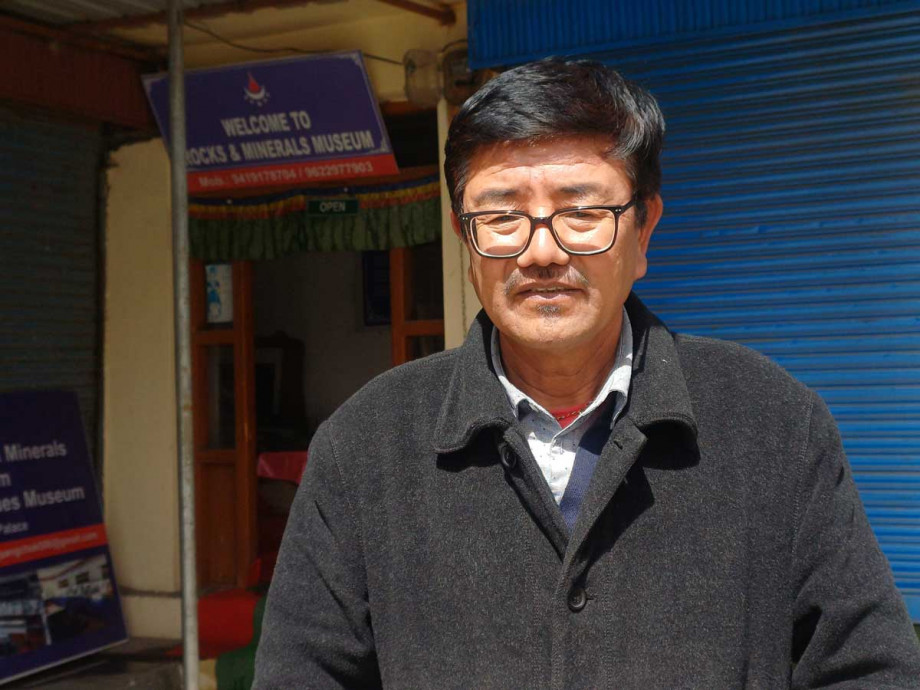
Q. Can you tell us about your journey and what inspired you to establish the Ladakh Rocks and Minerals Preservation Study and Museum?
Thank you for having me in this interview. My journey began with a deep interest in the natural image formations found on rocks. Gradually, this curiosity led me to explore the mountains and valleys of Ladakh, where I started collecting different types of rocks. Over time, I gained experience and developed an understanding of their varieties and significance.
I am 59 years old now, and I began collecting rocks at the age of 25. By 2014, my collection had grown so large that I no longer had space to keep it at home. This inspired me to establish the Ladakh Rocks and Minerals Museum, with the aim of displaying these specimens and creating awareness among the people of Ladakh about the geological wealth around them.
Many of us live in the mountains, yet we know very little about the rocks that surround us. While there are museums showcasing art, crafts, and culture, there was no dedicated space to exhibit the rocks and minerals found in Ladakh. I felt a strong need to fill this gap.
Ladakh is uniquely blessed with an abundance of rocks, minerals, semi-precious and precious stones, fossils, and remarkable geomorphological features—most of which remain unknown to the wider world. The museum aspires to preserve and showcase this rich geoheritage for the benefit of society through education, research, tourism, and sustainable development.
All the specimens in the museum have been ethically and carefully collected from the Himalayan region, predominantly Ladakh, ensuring authenticity and scientific value.
My main objective is to preserve this natural treasure and educate students, researchers, geologists, gemologists, mineralogists, and tourists about rocks, minerals, meteorites, and fossils.
The museum has been registered as a trust so that it continues to exist even after me. My vision is that it will serve as a lasting institution for learning and awareness for future generations.
Q. Why is it important to create awareness about rocks and geology in Ladakh?
In Ladakh, many people do not have much knowledge about rocks. Most of us simply think that rocks are just ordinary stones, without realizing their diversity and significance. In reality, rocks are broadly classified into three types, and within these categories, there are many different varieties.
Ladakh is a land of rare geological importance, with its unique topography shaped by the Himalayan and Karakoram mountain ranges. Geologically, the region can be divided into five major tectonic belts from north to south: the Karakoram Belt, Shayok Belt, Ladakh Granite Belt, Indian Belt, and the Suru Crystalline Belt. These belts represent a remarkable range of rock types from the Precambrian to the Tertiary age.
One of the most significant features of this region is the presence of a mélange zone along the boundary of the Indian and Asian tectonic plates. This zone contains veins rich in valuable minerals and fossils, which contribute to the colourful and diverse mountain landscapes of Ladakh.
This geological richness is of great significance not only for the people of Ladakh but also for students, researchers, youth, and tourists. It helps them understand that Ladakh is not just culturally rich but also a treasure trove of rocks, minerals, and fossils.
In our museum, we have preserved around 300 varieties of rocks and minerals found in Ladakh, with the aim of educating people and creating awareness about this unique natural heritage.
Q. What challenges have you faced in collecting rocks across Ladakh?
Collecting rocks from different places involves significant cost and comes with many challenges. I began my career as a teacher, but later left the job and started working as an LIC agent, which allowed me to travel across various parts of Ladakh. While my primary role was to educate people about life insurance, it also gave me the opportunity to explore different regions and search for unique rocks.
Even today, I continue to go on such trips whenever possible. Although it requires considerable expenditure, it gives me immense happiness and satisfaction to pursue what I truly love.
Of course, the journey has not been without risks. There have been difficult and dangerous situations—for instance, I once fell into an ice crevasse and suffered frostbite on my face. Despite such challenges, nothing has been able to stop me from continuing this passion. When you truly love what you do, you find the strength to keep going.
Q. You have submitted a project to the Ladakh Administration for establishing a museum. Could you tell us about it and the challenges you are facing?
Yes, I have proposed a project to the Ladakh Administration requesting land on lease to construct a dedicated museum in a mandala-shaped design. The proposed museum will house around 200 distinct types and over 1,000 specimens of rocks, minerals, and fossils, all sourced from the Himalayan region, especially Ladakh.
The vision is not just to create a display space, but a comprehensive educational and research institution. The museum will include classrooms, seminar halls, and laboratories for teaching, hands-on mineral study, and research. It will also have a library and digital archives with national and international geological publications, along with hostel facilities for visiting students, faculty, and research scholars.
The project is designed to have a strong socio-economic and scientific impact. It aims to promote geotourism and boost Ladakh’s local economy by attracting scientists, researchers, and tourists. It will also create employment opportunities for local youth and artisans, contributing to skill development and livelihood generation. At the same time, it will support scientific studies in mineralogy, Himalayan geology, biodiversity, and even traditional medicine.
Another important aspect of the project is community welfare. A portion of the museum’s revenue is planned to be allocated for supporting underprivileged students, healthcare initiatives, and elderly citizens.
The museum complex itself will include several attractions such as a rock garden displaying Himalayan specimens along with an interactive geographical map, permanent and temporary exhibition halls for minerals, fossils, meteorites, and rock art, and a resource centre for traditional medicine and mineral-based therapies. It will also provide opportunities for young entrepreneurs through rock cutting and polishing studios, souvenir shops, and other skill-based activities, along with a café offering Ladakhi hospitality.
In addition, the museum will actively engage with educational institutions through school and college outreach programmes, guided field tours, awareness sessions, and geology camps. Training workshops will also be organised for unemployed youth, focusing on skills such as gemstone craftsmanship, museum curation, and guided tourism.
As for challenges, the biggest hurdle has been securing land and necessary approvals. Such a large-scale project requires strong institutional support, funding, and coordination. However, I remain hopeful and committed to turning this vision into reality for the benefit of Ladakh and future generations.
Q. What would you like to say about the people who visit your museum?
The museum is truly appreciated by everyone who visits it. Many tourists have told me that their trip to Ladakh feels incomplete without visiting the museum, and that means a lot to me. Such feedback and appreciation are a great source of encouragement and motivate me to continue my work.
If I am able to secure land and develop the museum with all the planned facilities, it will become an even bigger attraction for tourists and a valuable asset for the people of Ladakh.
Message to the Readers
“I encourage everyone, especially the youth, to explore and understand Ladakh’s rich natural heritage. Our rocks, minerals, and fossils are valuable treasures that tell the story of our land. Let us preserve and promote this knowledge for future generations.”
-
 Reach Ladakh Skara Yokma, Airport Road, Near Councillor Quarter, India.


© 2018 Reachladakh. All rights reserved.
Web designs By : India Internet