


In Conversation with Member of Parliament, Ladakh, Mohd Haneefa Jan
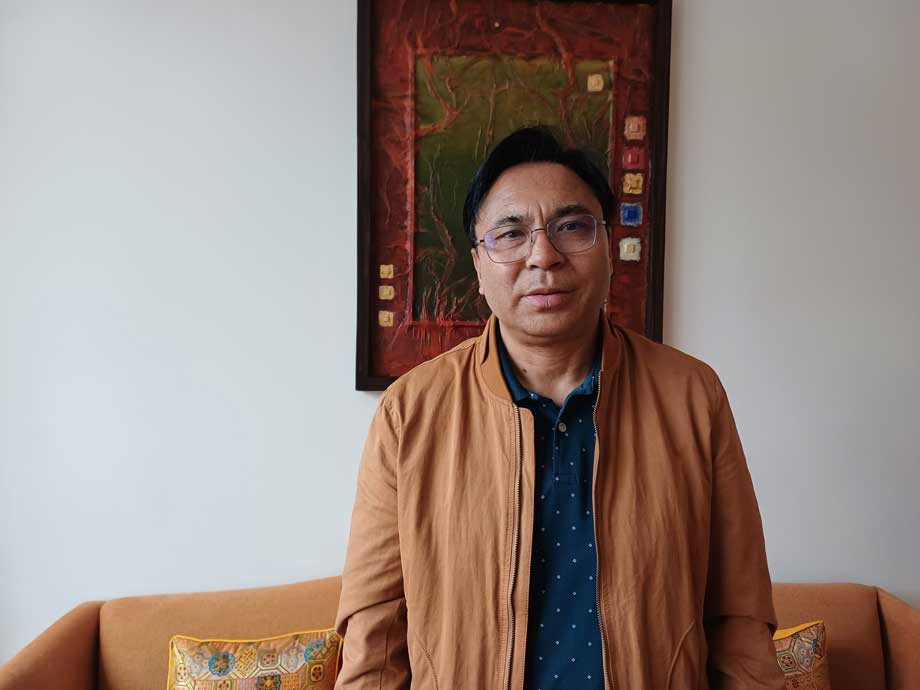
Q. You have completed more than two years as the Member of Parliament representing Ladakh. Looking back, what were your priorities when you entered Parliament, and what did you see as the biggest challenge?
When I contested the election, the circumstances were quite challenging. After Ladakh became a Union Territory, the biggest issue before us was how to build a strong foundation for Ladakh under the new administrative setup.
We wanted to create a foundation that would serve our future generations. Ladakh is a unique region in the country—geographically and topographically, as well as in terms of its climate, culture and way of life. It has always been a peaceful and patriotic region.While preserving these characteristics, we also have to protect our culture and way of life. Ladakh has a very large geographical area, but its population is relatively small compared with other parts of the country. Therefore, the challenge is to preserve our culture, traditions and way of life, safeguard the aspirations of future generations, and build a strong and sustainable Ladakh.
There were discussions about creating an appropriate democratic and administrative setup for Ladakh, and I also played a significant role in that process.
When the parliamentary election took place, our concerns remained the same. We were already discussing a four-point agenda with the Government of India and had also held protests several times.
My responsibility was to take these issues forward in accordance with the aspirations of the people of Ladakh—whether through negotiations with the Government of India or by raising these issues in Parliament. This was my biggest challenge, and people expected me to make it my first priority. I have tried to ensure that the aspirations and wishes of the people of Ladakh are represented both in Parliament and before the government.
Our aim has never been to fight with the government through protests and force it to accept our demands. That was never our approach.My effort has always been to ensure that our issues are resolved through dialogue.
Q. What major developmental and infrastructure issues have you taken up during your tenure as MP.
Another important responsibility of an MP is to take up major developmental issues and projects, particularly those that have been pending for a long time. Whenever I meet the ministries, my priority has always been to ensure that the health and education sectors of Ladakh receive due attention.
With regard to Centrally Sponsored Schemes, my effort has been to ensure that projects and funds are distributed rationally and according to actual requirements, rather than being concentrated in one particular area.
You can see this in the projects sanctioned under CRF since I became an MP. The projects have been sanctioned in a rational manner. Under PMGSY, the third phase was implemented in 2021, and we have now submitted around 80 projects under the fourth phase. Of these, around 30 have already received approval for preparation of DPRs. The DPRs for these 30 projects are now being prepared and submitted. Projects will come up in both Leh and Kargil according to priority and actual need.
After becoming an MP, I travelled to many parts of Ladakh, and one of the major problems I encountered was connectivity. Over the last two-and-a-half years, there have been many problems with BSNL's 4G services, and several areas required new towers. Around 40–45 new towers have now been sanctioned, and work has started. I would not claim that all the problems have been completely resolved, but the situation has improved considerably in many places. In some areas, towers had been constructed but were not operational, while in others there were signal-related problems. I have continuously taken up these issues with the concerned authorities.
There was also a long-pending issue concerning passport services in Kargil. I am thankful to the concerned ministries and the Joint Secretary who helped us move the matter forward. A Passport Seva Kendra is expected to be inaugurated in Kargil around the 3rd or 4th of the coming month.
These are some of the issues I have been working on. My effort has always been to sincerely fulfill the responsibility that the people entrusted to me with their faith and trust.
Q. There has been criticism that you give greater importance to Kargil while neglecting Leh, particularly in the allocation of development projects and funds. How do you respond to this criticism?
I say this with confidence: people should compare my record with that of all the MPs who have represented Ladakh so far. I have never approached these issues through the lens of religion or region. That has never been my way of thinking or working.
Over the past two-and-a-half years, although there are still some areas I have not been able to visit, I began my tours from Zanskar and travelled through several remote areas, including Nubra. There are still some areas in Kargil that I have not been able to reach, and I have also not yet visited Sham area.
I did not begin my tours with the intention of first visiting Buddhist areas or giving preference to any particular community. That was never the case. I started from a remote area like Zanskar and then travelled through Nubra and other far-flung parts of Ladakh.
I therefore do not understand on what basis this allegation is being made. If there is any concrete evidence that I have discriminated between Leh and Kargil or treated the two regions differently, then it should be brought forward. Even in the funds that I have recently released, people can examine the distribution and see how much funding has gone to Leh and how much to Kargil. The figures are available and there is nothing to hide.
My belief is that whatever work you do, your intentions and priorities eventually become clear.
Through your platform, I would once again like to assure the people that, while mistakes can happen in any work, I will never intentionally discriminate on the basis of region or religion.
Q. What major development initiatives and projects have you taken up during your tenure, particularly in Leh and Kargil, and what are your priorities in the health and education.
Under CRF and PMGSY, several long-pending projects have been taken up. For example, the Turtuk-Hanu road was one of the first demands raised by people during our Nubra tour. When I reached Delhi, it was among the first issues I took up. However, I would not claim that it was solely my achievement. At that time, councillors were also working on it, and the concerned councillor included it in the proposal and continued to pursue it.
Similarly, there is a major bridge in the Nubra area, that has been taken up this year. It was not included earlier, and I made considerable efforts to get it included.
Whenever such projects come up, my approach has always been to ensure that they are considered rationally and according to priority and actual need. Whenever I meet the ministries, I emphasise that genuinely deserving projects should be given priority.
Recently, I met Home Minister Amit Shah as well as the Union Health Minister to discuss the health-related issues of Ladakh.
One of our major concerns is the medical college. The medical college at the proposed new site will eventually come up, but it will take considerable time. In the meantime, our demand, which has also been raised from the Leh side, is that the medical college should be started, at least initially, at the existing hospital in Leh. This would allow the process to begin and the required posts to be created at the earliest.
Similarly, we are pursuing the upgradation of Kargil District Hospital. At present, it has around 100 beds, and we are working to increase its capacity to 200 beds.
Healthcare is a major concern for Ladakh. Since Ladakh became a Union Territory, many patients still have to be referred outside the region. I have raised this issue several times with the ministry as well as with the Lieutenant Governor. When patients are referred outside, particularly those in critical or emergency conditions, they do not always receive the kind of attention and support.Becoming a Union Territory should also mean that essential healthcare facilities are strengthened within Ladakh itself. We are working towards ensuring this.
There is also a need for specialised healthcare services in Leh. There are four or five key specialities that are particularly required, and our aim is to make such services available in both Leh and Kargil.
In the education sector, an engineering college in Kargil has been announced. However, the project is currently pending with the Finance Department. Land has already been identified in Kargil, and we are working to ensure that the project moves forward at the earliest.
There are many such initiatives currently in the pipeline, and we are working on them. God willing, these projects and initiatives will materialise in the coming years.
Q. What progress has been made on Ladakh’s demand for constitutional safeguards and a stronger democratic setup?
Apart from developmental issues, we have also been pursuing our broader political concerns. We have consistently demanded a stronger democratic setup for Ladakh, while the biggest concern has been securing adequate constitutional safeguards for the region.
In the last meeting of the High-Powered Committee, a consensus emerged on exploring various provisions under Article 371 and bringing together suitable safeguards for Ladakh. The issue of providing constitutional protection to Ladakh through such provisions was discussed.
There was considerable discussion on this proposal. Although our demand for a full-fledged legislature could not be accepted in its original form, particularly because of financial considerations, a consensus was reached on creating a setup for Ladakh that would be equivalent to a legislature.
This was not merely a verbal understanding. Minutes were also signed, clearly specifying the powers that the proposed setup should have.
Even in the most recent meeting, we submitted a list of certain points that we consider non-negotiable. Discussions on these issues are progressing positively, in my assessment.
However, we have also made it clear to the government and the ministry that the process needs to be speeded up. We cannot have one meeting today and then wait another six months for the next meeting. There is a need for regular discussions and faster decision-making so that these issues can be taken to their logical conclusion.
Message to the readers
I thank the people of Ladakh for their trust and support. I will continue to work sincerely for the development and aspirations of Ladakh, without any discrimination.
-
 Reach Ladakh Skara Yokma, Airport Road, Near Councillor Quarter, India.


© 2018 Reachladakh. All rights reserved.
Web designs By : India Internet