


In Conversation with Dorjay Chodon: Monastic Life, Medicine, and Service
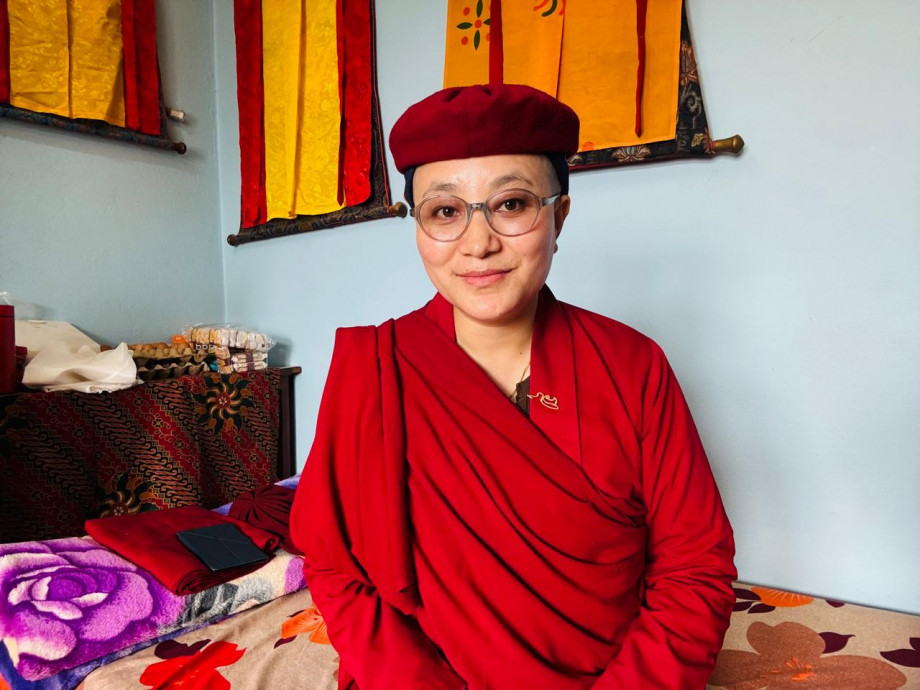
Q. Could you tell us about your early life and what inspired you to choose the monastic path?
Jullay, and thank you for having me. I am from Nee village in Rong Changthang. I completed my early education at Government School, Liktsey. Coming from a spiritual family background, I was naturally inspired to choose the monastic path and become a nun.
I studied until Class 11 and initially wanted to continue my education further. However, I felt a strong inner calling toward monastic life. When I turned 16 years old, I received the blessings of His Holiness Gyalwang Drukpa and became a nun.
Becoming a nun was one of the best decisions of my life. With His Holiness’s blessings, I learned about monastic discipline, studied and practiced the teachings of the Buddha, and performed the required rituals while dedicating myself to spiritual life.
Over time, we also focused on contributing to society in practical ways. For example, we realized the importance of learning to drive in the modern era, so I learned driving and served as a driver in the monastery for nearly three years.
Later, during a pilgrimage to Kaza in Himachal Pradesh, His Holiness Gyalwang Drukpa advised me to study Sowa Rigpa (traditional Tibetan medicine), as
I come from an Amchi family background. Following his advice, I began studying Amchi traditional medicine alongside my monastic training.
Today, I serve as an Amchi at Druk Amitabha Monastery in Nepal.
Q. When and how did you become interested in Amchi (Sowa Rigpa) medicine? Where did you receive your training, and who were your teachers?
I come from an Amchi family background. My grandfather was a renowned Amchi, and my father and two uncles are also Amchis. So the interest in Sowa Rigpa was always there. However, I never had the courage to practice it because it is not as easy as it sounds. Being an Amchi means taking great responsibility — you are entrusted with curing illness, healing people, and giving them comfort.
The courage to formally study and practice came after I received advice and encouragement from His Holiness Gyalwang Drukpa to become an Amchi. Following his guidance, I decided to pursue this path seriously.
His Holiness then introduced me to Dr. Dolkar, a renowned Amchi in Delhi, under whom I studied Sowa Rigpa. I trained under her for seven years, learning the theoretical foundations and later gaining practical experience. In total, I stayed with Dr. Dolkar for 16 years to deepen my knowledge and skills.
After completing my training, I returned to Druk Amitabha Monastery in Nepal, where I have been serving for the past four years.
Alongside this, I also worked for two years at Norvic International Hospital, one of the leading hospitals in Nepal. There, I gained experience in different departments, which helped me understand and work within the modern healthcare system as well.
Q. How do you see the role of traditional medicine and today’s modern healthcare system?
The integration of traditional medicine and modern healthcare is very important, as the primary objective of both is to heal the patient.
When a patient who is already taking allopathic medicine comes to me, I do not advise them to stop it completely. Instead, I recommend maintaining at least a half-hour gap between the two treatments. Suddenly stopping prescribed medication — especially for conditions like high blood pressure — can be dangerous.
Sowa Rigpa requires patience and works gradually, while allopathic medicine often shows quicker results. Therefore, a balanced approach that respects both systems and prioritizes the patient’s needs is essential.
Q. How do Buddhist teachings influence your approach to diagnosis and treatment?
Buddhist teachings influence diagnosis and treatment by focusing on understanding the whole person, not just the symptoms. They encourage looking at the root causes of suffering, such as stress or negative thinking, and promoting mindfulness and compassion. This approach supports balanced, kind, and patient-centered care while still using proper medical treatment.
Q. How has monastic life shaped your inner strength and discipline?
Definitely, monastic life has deeply shaped my inner strength and discipline. It teaches you to live a structured and meaningful life filled with positivity. Waking up early in the morning, performing daily rituals, practicing meditation, and following a disciplined routine all help build mental stability and focus.
Living in a positive and spiritually supportive environment also nurtures mindfulness and develops a compassionate heart. Over time, this disciplined way of life strengthens inner resilience, patience, and emotional balance.
Q. Do you feel nuns receive equal recognition and opportunities?
Yes, it is true that in the past, nuns received far less recognition and fewer opportunities compared to monks. There was a common belief that nuns were not allowed to pursue higher studies or participate in important monastery rituals, such as mask dances. It was often thought that their role was limited to reciting mantras and staying within the monastery.
However, over time, and especially through the initiatives of His Holiness Gyalwang Drukpa to empower nuns, this mindset has gradually changed. Today, nuns are participating equally in various monastic activities, pursuing higher education, and receiving greater recognition and opportunities in different fields.
Q. How does your role as a nun allow you to serve society beyond the monastery?
As a nun, our role allows to serve society beyond the monastery by sharing compassion, guidance, and spiritual support with the wider community. Before that it’s important to sincerely understand and practice at individual level before teaching mindfulness and ethical living, offer counseling and emotional support and promote peace and understanding. Through these actions, we can help people cope with stress, build kindness, and live more balanced and meaningful lives.
Q. In some parts of Ladakh, families tend to send children who are sick, physically challenged, or slow in learning to monasteries. What are your thoughts on this practice?
Yes, it is true that in some parts of Ladakh families send children who are sick, physically challenged, or slow in learning to the monastery. I personally find this very disheartening. It often comes from ignorance and the belief that such children have fewer opportunities elsewhere.
I feel this practice and mindset need to change. A monastery is not a place to send someone simply because they are struggling. Monastic life requires commitment, discipline, and genuine interest. At the same time, monasteries are places of learning, growth, and service to society — not places for abandonment. Every child, regardless of their abilities, deserves proper care, education, and equal opportunities in society.
Q. What message do you wish to convey to young women interested in monastic life?
My message is especially for the parents and families of girls and women who wish to choose the monastic path — please encourage and support their decision. In many cases, parents worry that their daughters will not become self-reliant, independent, or successful in learning and practicing the Dharma. Such thoughts should be avoided, and we should not be judgmental.
A woman can achieve many things while living a monastic life. She can pursue higher education, learn Sowa Rigpa, develop different skills, and serve society in meaningful ways. It is important to respect her decision and provide encouragement and understanding.
Message to the readers
May we all choose our paths with sincerity and compassion, respect the decisions of others, and work together to build a more understanding and kind society.
-
 Reach Ladakh Skara Yokma, Airport Road, Near Councillor Quarter, India.


© 2018 Reachladakh. All rights reserved.
Web designs By : India Internet