


KIWG 2026: Army retain Ice Hockey Gold, Chandigarh win hearts; Haryana crowned overall champions, hosts Ladakh finish second Ladakh skater Skarma Tsultim wins highest four medals (2 gold); Ishaan Darvekar (Maharashtra), Nayana Sri Talluri (Telangana) and Sachin Singh (Haryana) bag two golds each
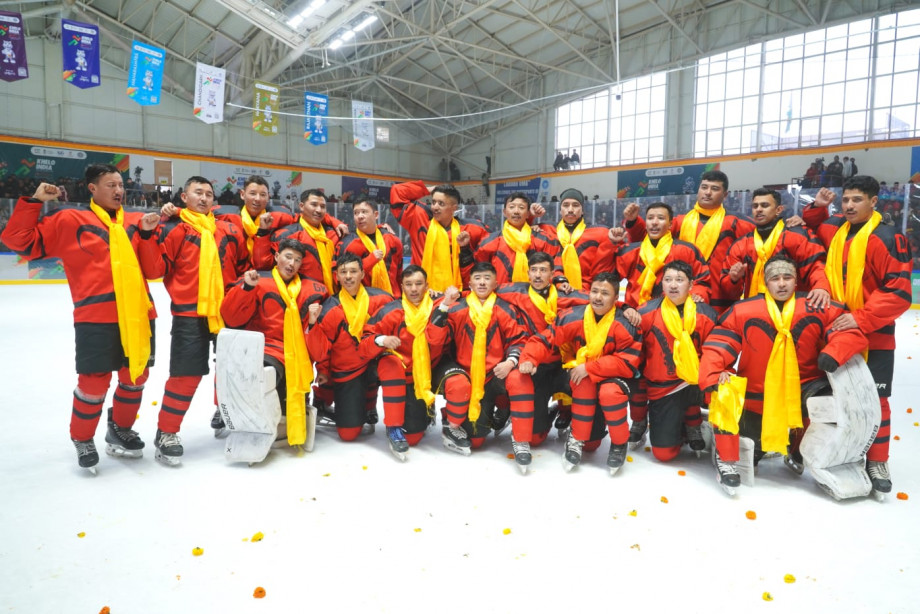
The experienced Indian Army team had to dig deep to edge out a spirited Chandigarh side 3–2 and retain their men’s ice hockey gold medal at the NDS Stadium on Republic Day, providing a thrilling finale to the Ladakh leg of the Khelo India Winter Games (KIWG) 2026.
The decisive goal came just three minutes from the final whistle, ensuring a dramatic ending that matched the festive occasion.
Haryana emerged champions of the Ladakh phase of KIWG 2026, riding on four gold medals secured by their figure skating and ice skating contingent. Ladakh, Maharashtra, and Telangana won two gold medals each but were separated on the medal table by silver counts. Ladakh finished second overall with five silvers, followed by Maharashtra (three silvers) and Telangana (two silvers).
The Chandigarh men’s ice hockey team became the surprise package of the tournament after stunning hosts Ladakh 3–2 in the semifinals on Saturday. Having taken up ice hockey only in KIWG 2025, Chandigarh’s march to the final was remarkable. Their performance against Army confirmed that their semifinal win was no fluke. After trailing by two goals, Chandigarh mounted a stunning comeback and nearly forced extra time—an impressive feat, especially considering they had lost 10–1 to Army in the league stage.
The NDS Stadium witnessed unprecedented Republic Day celebrations, with the 5,000-capacity, newly upgraded covered stadium filling up more than an hour before the final.
Army opened the scoring in the sixth minute when Padma Namgail’s long-range flick found the net. Tsewang Dorjay doubled the lead in the 10th minute of the first period with a powerful push into the far corner.
The second period remained goalless as Chandigarh played disciplined, clean hockey. Unlike many high-intensity matches, the final was notable for its skill-based, attractive play rather than physicality.
Chandigarh launched a stunning comeback in the final quarter, scoring twice within three minutes. Gurtej Singh Bhatti broke through the Army defence with eight minutes remaining, before Birshahaanjit Singh equalised with a deft flick from behind the Army goal. The goal was awarded after a lengthy video review lasting over 10 minutes.
Shaken by the fightback, Army stepped up their attack. A rare lapse in Chandigarh’s defence allowed Padma Norboo to score the match-winner with another long-range effort.
“I think that we are the winners. It was truly an exceptional experience, and everything happened by the grace of God. This journey has meant a lot to us. We promise to work even harder next time, train with more dedication, and fight for trophies at the state level and beyond,” said Chandigarh head coach Gaurav Raheja.
Goal-scorer Birshahaanjit said his background in inline hockey helped him adapt quickly to ice hockey. “I have been playing inline hockey for the past eight years, which has given me confidence in skating, dribbling and puck control. This is only my second year on ice. Last year we finished fifth, and the progress we have made is significant. I am confident we will be playing for gold next year,” he said.
Army’s Padma Namgail admitted his team felt the pressure after Chandigarh’s late surge. “Frankly, we didn’t expect them to be this good. They played very well, though we were also not at our best today. It happens sometimes against less experienced teams. Against ITBP, we took no chances. Full credit to Chandigarh,” he told SAI Media.
Republic Day action at the NDS Stadium began with the 2000m short-track mixed relay heats, featuring the best speed skaters from six teams divided into two groups. The top three qualified for the final.
Nayana Sri Talluri (Telangana), Skarma Tsultim (Ladakh) and Sachin Singh (Haryana) were all in contention for a third gold medal, but Telangana and Tamil Nadu were disqualified in Heat 1, while Haryana finished last in Heat 2.
The final featured Maharashtra, Ladakh and Karnataka. Maharashtra fielded the strongest combination and lived up to expectations as Ishaan Darvekar, Anvayee Deshpande, Sohan Tarkar and Schaleen Fernandes clinched gold with a timing of 3:22.47. Ladakh, led by Skarma Tsultim, settled for silver (3:29.34), while Karnataka claimed bronze.
At the conclusion of the ice skating events, Ladakh’s Skarma Tsultim emerged as the most decorated skater with four medals—gold in the 1000m long track and women’s relay, and silver in the 500m long track and mixed relay. Maharashtra’s Ishaan Darvekar (two golds) and Anvayee Deshpande (one gold) finished with three medals each. Nayana Sri Talluri, who had won three golds in KIWG 2025, secured two individual golds this year, while Sachin Singh of Haryana also bagged two gold medals.
“Compared to the previous five editions, the overall standard of ice skating has improved noticeably,” observed national coach Mohammad Abbas Nordak. “Skaters showed better timing, technique and consistency. In men’s events, Muthakani Vishnu Vardhan and Sachin Singh stood out, while among women, Nayana and Skarma delivered consistently competitive performances.”
“The next step is to nurture these talents through exposure and international competition. Overseas participation will help them understand higher competition levels and prepare for global events,” Abbas added.
-
 Reach Ladakh Skara Yokma, Airport Road, Near Councillor Quarter, India.


© 2018 Reachladakh. All rights reserved.
Web designs By : India Internet