


Human rights, mental health take centre stage at NHRC review meeting in Leh Special Rapporteur Shomita Biswas reviews welfare schemes, prison conditions and healthcare services
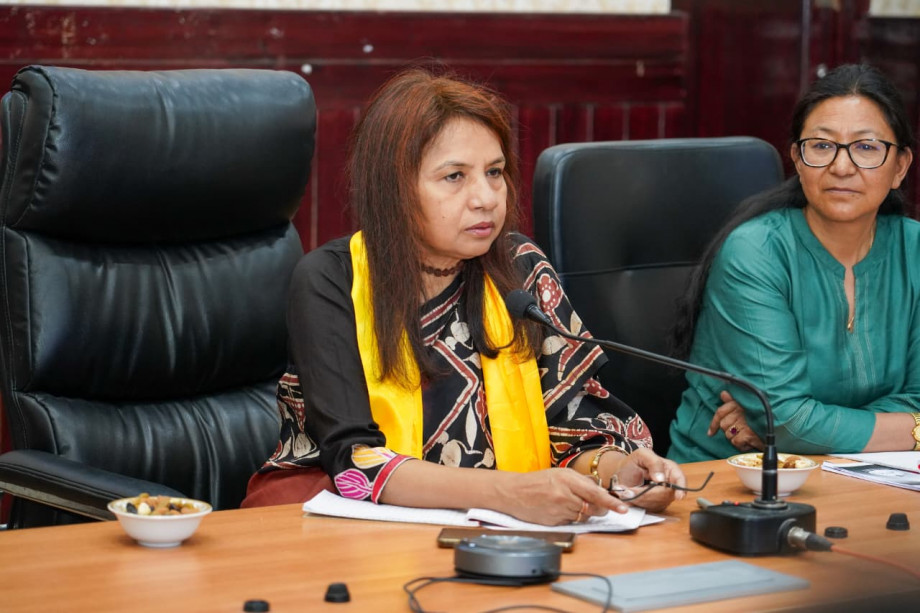
Special Rapporteur of the National Human Rights Commission (NHRC) for the Himalayan Region, Shomita Biswas, on July 20 chaired an interactive review meeting at the DC Conference Hall, Leh, to assess human rights-related issues concerning the Social Welfare, Tribal Affairs, Prisons and Health sectors in the Union Territory of Ladakh.
The meeting was attended by the Deputy Commissioners of Leh and Changthang, Special Secretary Home, Senior Superintendent of Police Leh, Superintendent of Police Changthang, Deputy Superintendent of Police Leh, Deputy Director Health Services, Chief Education Officer Leh and senior officers from various departments. Deputy Commissioners and officials from other districts also joined the meeting virtually.
Welcoming the Special Rapporteur, the Programme Manager of the Social Welfare Department briefed participants on the objectives of the interaction.
Addressing the gathering, Shomita Biswas highlighted the broad and cross-cutting nature of human rights, noting that they encompass every aspect of human life and dignity. She said her mandate as NHRC Special Rapporteur for the Himalayan
Region includes examining issues affecting vulnerable sections of society, particularly children, women, persons with mental health concerns, prisoners and other marginalised groups.
She emphasised that protecting human rights requires coordinated action among the Home, Social Welfare, Health, Education and other departments, with special attention to children, adolescents, women, persons with mental health concerns and those living in institutional care.
Highlighting mental health as a key concern, Biswas observed that social stigma continues to discourage many people from seeking psychiatric and psychological support. She stressed the need for early identification and intervention, particularly among children and adolescents, and called for greater awareness among parents, teachers and communities.
She also underlined the need to address substance abuse and the influence of harmful digital content among young people through counselling, awareness, supervision and rehabilitation, rather than relying solely on punitive measures.
The Special Rapporteur stressed that adolescent health, nutrition, education and mental well-being are integral to the protection of human rights. She highlighted the importance of tackling anaemia, nutritional deficiencies and adolescent health issues, while ensuring adequate nutrition for pregnant women, lactating mothers and children through Anganwadi centres and other welfare mechanisms.
During the meeting, the Social Welfare Department presented an overview of major welfare initiatives, including Mission Saksham Anganwadi and Poshan 2.0, Mission Vatsalya, Mission Shakti, the Nasha Mukt Bharat Abhiyan, District De-Addiction Centres, scholarship schemes, the Lieutenant Governor's Students Support Initiative, Integrated Social Security Schemes, the National Social Assistance Programme, and infrastructure development projects. The status of Observation Homes, model Anganwadi Centres, old-age homes and the Open Shelter Home at Kargil was also reviewed.
Biswas sought details on drug-related cases and emerging trends in substance abuse. The Senior Superintendent of Police, Leh, informed the meeting that such cases have increased in recent years due to improved connectivity and changing social patterns.
Discussions also covered scholarship schemes and the maintenance of welfare infrastructure.
The Prison Department presented a detailed overview of the District Jail, covering infrastructure, security arrangements, manpower, sanitation, prisoner welfare, rehabilitation initiatives and the offence-wise profile of inmates.
During the review, Biswas emphasised the need for a dedicated and well-trained jail cadre and sought information on mechanisms for addressing human rights complaints in prisons. She also reviewed medical facilities, routine health check-ups, mental health screening and record-keeping for inmates.
She stressed the importance of regular physical and mental health assessments, early identification of vulnerable inmates, proper categorisation and timely intervention. She also called for strengthening rehabilitation programmes through skill development, vocational training and computer-based courses to support the reintegration of prisoners into society.
The Health Department presented an overview of healthcare services in Ladakh, including maternal and child health programmes, the National Health Mission, the Rashtriya Bal Swasthya Karyakram (RBSK), the District Mental Health Programme, community health services and the National Programme for Health Care of the Elderly.
The Special Rapporteur emphasised the need to strengthen mental healthcare services through regular outreach visits, structured screening, counselling and follow-up mechanisms, particularly for vulnerable groups who may not be able to access hospitals, including prisoners and those in institutional care.
She also underscored the importance of coordinated institutional action to protect children, women, prisoners and other vulnerable groups. Calling for stronger monitoring mechanisms, regular field assessments and better inter-departmental coordination, she stressed that welfare schemes must translate into tangible benefits for the people.
Observing that changing social conditions require stronger institutional preparedness, Biswas urged departments to remain vigilant and ensure timely intervention in matters relating to human rights, mental health, substance abuse, child protection, women's welfare and rehabilitation.
The meeting concluded with a renewed emphasis on strengthening inter-departmental coordination and adopting a more systematic, preventive and rights-based approach to addressing human rights concerns in Ladakh.
As part of her visit, the NHRC Special Rapporteur is also scheduled to undertake field visits across various districts of the Union Territory to assess the implementation of welfare and human rights initiatives and interact with stakeholders and beneficiaries on the ground.
-
 Reach Ladakh Skara Yokma, Airport Road, Near Councillor Quarter, India.


© 2018 Reachladakh. All rights reserved.
Web designs By : India Internet