


In Conversation with Padma Angmo, Author
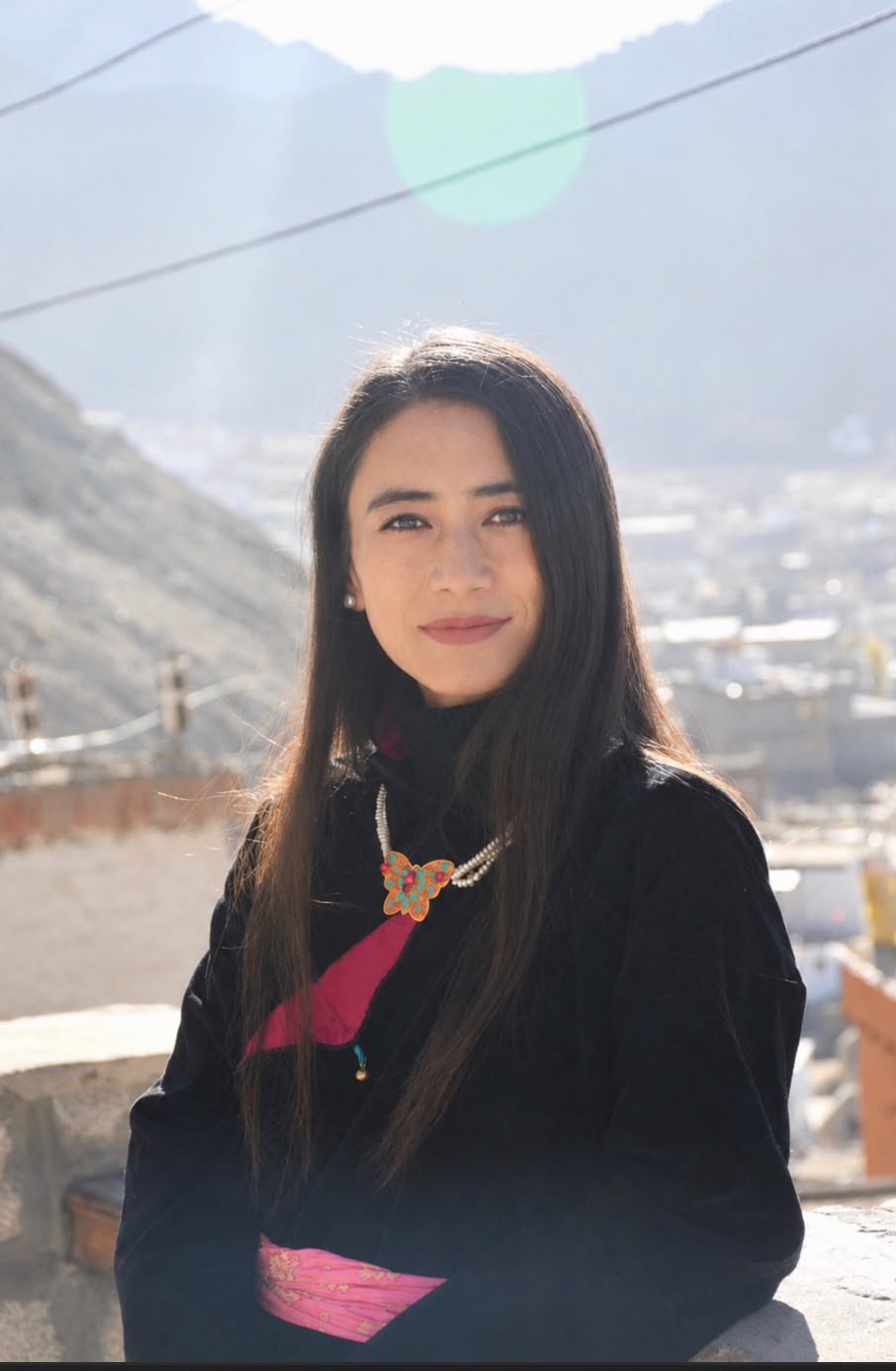
Q. Please introduce yourself and tell us about your journey. What inspired your first book, Ruler of the Sky?
Jullay, and thank you for inviting me. I completed English Honours at the University of Delhi and studied Journalism at the Indian Institute of Mass Communication (IIMC). I worked with Times Now as a newsreader for Times News Radio and as a copy editor, then returned to Ladakh to work as a reporter with the Information Department and as a consultant at Ernst & Young on the Sustainable Tourism Development Policy.
When I first thought of writing a book, I lacked the courage. During school visits and workshops, I often see the same lack of self-belief in children that I experienced. I wondered: Who am I to become a writer? Writers often seemed to come from outside Ladakh, but becoming a writer was a precious dream I could not give up. As a child, I wanted to serve my community and be a voice for the voiceless, which led me to journalism. At Times Now, I found that news was often driven by TRP ratings and fear. I was also encouraged to adopt an American, British or mainland Indian accent. Our voice is connected to our roots, and I did not want to change mine to fit others’ expectations. I first hoped to address the climate crisis through journalism, but discovered poetry as another medium. Journalism seemed to ask me to change, while poetry let me embrace my identity. Leaving mainstream media was difficult, but I chose to resign and dedicate myself to Ruler of the Sky.
I feared that only my family might read the book, but my dream was bigger than my fears. I was also witnessing environmental and social changes in Ladakh: changes in the landscape, people and communities. Through Ruler of the Sky, I wanted to explore ecological grief and how environmental change affects our emotions, relationships and ways of life.
The poem The Truth in Ruler of the Sky captures my choice of identity over conformity. The chapter The Hero explores false leaders and hero worship. Blindly following others makes us stop questioning and lose our voice. I want readers to reclaim their power and individuality. The book also celebrates poetry. Poems such as The Tales of Four Seasons are accessible to all ages. I read them to children because poetry should be something everyone can enjoy. For me, it is about finding our voice and expressing what we feel.
Q. Your books, Ruler of the Sky and Katabita, are very different. What made you write two kinds of books?
My journalism background strengthened my observation skills. While working with the Department of Information and Public Relations, I accompanied Commissioner Secretary Padma Angmo to cover Social Welfare Department activities. During a visit to Munsel School, a school for children with disabilities, I noticed the children’s drawings. Their creativity made me realise how easily we focus on one aspect of a child’s identity and overlook other forms of expression. I promised myself I would return for a creative writing and art workshop.
Around the same time, I covered children in street situations and visited the old-age home in Shey. I met elderly people facing abandonment and property disputes—difficulties I had not imagined were so prevalent in Leh. Their wisdom reminded me of the power I saw in the children’s artwork. I wanted to bring these experiences together.
In November 2024, I organised Super Power with two artists. They taught art while I led creative writing. We created a safe space by sharing our own superpowers first. The children made drawings and scribbles; I saw meaning in them —magic in the mess and beauty in chaos. Many drew JCBs, excavators and mountains, showing how perceptive children are.
These experiences became Katabita. Though different, both books share the same heart. Katabita is rooted in Ladakh and explores how to change without forgetting what matters. It grew from the people I met, what I observed and my promise to Munsel School
Q. What challenges does a writer face in Ladakh, and what potential do you see for writers and literature to grow in the region?
People discouraged me, asking who would read books in Ladakh and advising me to seek a government job. I wrote because I loved it. After publication, some of them congratulated me, and I noticed a change in how they viewed books.
Being called the first woman poet is not simply a title to me; the person who climbs a mountain first also faces challenges. Mindsets must change. My book costs Rs 500, which some consider expensive, but publishing is costly and its value goes beyond its price. I chose writing over a more financially stable career because I wanted to contribute to Ladakh’s literary landscape and cultural representation. Children need to see their culture and experiences in books; otherwise, they may not imagine becoming writers. We may spend Rs 1,000 on toys or at a café, yet question spending Rs 500 on a book. A book can shape a child’s thinking and teach beyond entertainment.
I wanted to introduce children to emotional intelligence. A book alone cannot solve substance abuse, but helping children understand their emotions early may address deeper problems. Not every child has someone supportive to share feelings with. English is sometimes treated only as a subject to pass or a means of communication. Literature involves engaging with ideas and human experiences, understanding contexts, analysing themes and thinking critically. It helps us explore society, relationships, politics, emotions and identity.
Q. What advice would you give young people who want to become writers but do not know where to start?
My parents brought me books because I was an introvert. They gave me literary classics, and even when I could not understand them, I looked through and scribbled in them. Repeated exposure develops interest. Not everyone gets this opportunity early, but it is never too late to begin reading. Read and write, but also observe. Think like a journalist: research, investigate, interview and understand different
perspectives. Live fully, observe your experiences and develop your own opinions. Write even if you do not intend to publish; share your work when ready.
Originality matters. Develop your own voice rather than copying others. A boy at a workshop asked, “Who will read a Ladakhi’s book?” I told him people would read it because he is Ladakhi. Our roots and experiences make our stories worth reading.
Ruler of the Sky took five years, and my second book took two. Meaningful writing takes time. Shortcuts may be faster but not satisfying. Challenge yourself, remain original and put your heart into your work.
Q. Is there any topic or story you still wish to write about?
After writing Ruler of the Sky, the idea for Katabita came naturally, like taking one step and discovering the next. I realised I had more ideas. Both books are a gift to the community. A portion of Katabita’s proceeds will support children with disabilities in Ladakh. I wanted the book to have a purpose beyond reading. Its activities make reading interactive and revive the storytelling tradition of our grandparents, who told stories on rooftops. Families and teachers can do these activities with children.
I want to revive folklore and storytelling. I am working on books on folklore, short stories and poetry, and have many ideas ahead. If you do something with integrity, you will find your way.
Q. Folklore and storytelling traditions are declining, and reading habits are changing, especially among young people. With social media and phones taking up so much time, what would you say to people who want to read but struggle to step away from social media?
We need to address our social media use. Even I struggle sometimes. Parents should introduce children to good books early. I am not saying they should stop buying toys or treats; we need balance. Give children more books and perhaps fewer toys to help nurture their future.
Children are being given mobile phones at a very young age, which can affect the development of their cognitive abilities. Reading is one way to address social media addiction. I encourage parents to give children books instead of always buying plastic toys and junk food. A book is gold, and healthy food for the brain.
It is never too late to read. If you cannot concentrate, try deleting social media applications and reinstalling them only when needed. Excessive phone use can affect concentration and memory. Instead of saying we are addicted, take action and read.
A children's book is not only for children; it can help anyone reconnect with the inner child. In Thus Spoke Zarathustra, Friedrich Nietzsche describes three stages of transformation: the camel, which carries responsibilities; the lion, which questions and challenges imposed values; and the child, which represents innocence, creativity and freedom to create one’s own values. It is a journey from obedience, to rebellion, to creation.
You mentioned that my book looks like a children's book, but I feel that I am reconnecting with the fearless and powerful version of myself that I was as a child. I feel that my creativity and everything within me are becoming stronger again. I am not saying that we should become children; I am saying that we should bring out the child within us—the sense of wonder, courage and freedom that we sometimes lose as we grow older.
There is nothing to be embarrassed about when reading children's books. It is not about being childish, but childlike. Books open up different worlds and ideas beyond our daily routine. We often feel time is passing faster, but our lives have become so occupied with social media that we hardly notice the days going by. We must control social media rather than allowing it to control us.
For adults who want to write, my advice is to work with honesty and dedication. Observe the world and live fully; experiences become the foundation of writing.
I thank the Munsel School staff, especially principal Kunzang Palkit, Madam Kunzes and CEO Tsewang Yangzes. Their support and dedication inspired me. Greater government support, better facilities and resources would help them do more. Children with disabilities deserve opportunities. This book shows that with time, trust and encouragement, their gifts can shine. I am proud these children are official illustrators. I thank the Munsel School staff, especially principal Kunzang Palkit, Madam Kunzes and CEO Tsewang Yangzes. Their support inspired me. Better facilities and resources would help them do more. Children with disabilities deserve opportunities. This book shows that with encouragement, their gifts can shine. I am proud these children are official illustrators.
The student illustrators and their contributions:
Tsewang Namgyal: Yellow JCB, brown car, cat and dog.
Samchok Gyatso: Pink JCB, pink car and helicopter.
Diskit Angmo: Fruits and vegetables.
Stanzin Chosgyal: Timid green caterpillar, mountain with sunrise, and a pink house with a red roof.
Rigzen Nurbo: Pink house.
Chemat Rabjor: Mountain and sunrise, fruits and vegetables.
Manish Kumar: Fruits and vegetables.
Jigmet Namgyal: Blue hand and apple.
Konchok Rinchen: Red forest, red trees and butterfly.
Kunga Samphel: Red forest with a stream.
Thinley Norbo: Doodle.
Stanzin Tundup: Doodle.
Stanzin Tharlam: Tree and orange.
Kurga Moslam: Doodle.
Stanzin Lundup: Red hands.
I thank all these children for their beautiful contributions. I hope they continue creating, exploring their talents and believing in themselves. They have made this book even more special for me.
Message to the Readers
“Believe in your dreams, embrace your roots and never be afraid to find your own voice. Read, write, observe and express yourself. Your stories matter, and your experiences are worth sharing. Stay curious, creative and true to yourself.”
-
 Reach Ladakh Skara Yokma, Airport Road, Near Councillor Quarter, India.


© 2018 Reachladakh. All rights reserved.
Web designs By : India Internet