


In conversation with Mohd Mustafa Kamal, National Teachers Awardee
Q. What inspired you to take up the challenge of transforming rural government schools in Kargil, and how did your personal experiences shape your vision for education?
Jullay! Growing up in Wakha during the Kargil War left a lasting impression on me. My education took place in different settings. I attended primary school in Wakha and continued my middle-level education in Kargil. When the war disrupted normal life, I returned to Wakha. Later, I resumed my studies in Kargil and completed Class 12 at HSS Drass during a particularly difficult period. Those years were challenging, both mentally and academically, but they taught me how deeply a child's education can be affected by circumstances beyond their control.
My first teaching experience was at AGS Harka Bahadur in Kargil, where I worked for nearly six months. I then moved to Srinagar for higher studies and completed my postgraduate degree in History through the University of Kashmir. Moving between villages, schools and different working environments exposed me to people with diverse experiences, expectations and perspectives. Gradually, I began to understand that education is not merely about completing a syllabus; it is also about understanding children, their circumstances and the opportunities available to them.
When I joined the School Education Department in 2011, I was enthusiastic and eager to introduce new ideas into the classroom. Like many young teachers, I wanted to make learning engaging and meaningful. Over time, my understanding of teaching continued to evolve, and I began exploring ways to connect classroom learning more closely with children's lives.
An important turning point came in 2016. As President of the Ladakh General Line Teacher Forum (L-GLTF), I worked with the forum's executive members and fellow teachers to explore ways to strengthen learning opportunities in rural government schools and build community confidence in them.
We submitted our proposal to LAHDC Kargil and the Education Department. Following deliberations and consultations involving the then CEC, Haji Haneefa Jan, educationist Sonam Wangchuk, principals, ZEOs and others, approval was granted to undertake the initiative at Middle School Karith and Middle School Lankarchay Thang.
The experience was encouraging. Two teachers from Karith later received National Teacher Awards, while my work at Lankarchay Thang was recognised with the Ladakh State Award in Teaching and Academics 2021, which was conferred on Republic Day in 2022.
Subsequently, my work at Government Model Middle School Grong Pashkum, particularly between 2021 and 2026, received national recognition through the National Teachers Award 2026.
However, what mattered most was not the awards alone. We began seeing communities in other parts of Kargil expressing interest in similar Model School initiatives. This created a positive spirit of learning and collaboration, with teachers and communities coming forward to improve their schools.
Looking back, I feel my passion for teaching was renewed when I witnessed what teachers, communities and institutions could achieve by working together. My childhood taught me to value educational opportunities, while my teaching journey has taught me the importance of creating those opportunities for every child.
Q. You transformed an unused civilian bunker from the 1999 Kargil War into a “Cave Museum Class” at Government Model Middle School, Grong Pashkum. What inspired this idea, and how has it enriched students’ learning experiences?
The civilian bunker dug during the 1999 Kargil War for protection and had remained unused for years on the school campus. I began wondering whether the space could be put to meaningful educational use. As a History teacher, I wanted children to experience the past rather than simply read about it. This idea gradually evolved into the Cave Museum Class.
We developed learning activities around prehistoric life. Students painted the walls, practised inscription writing and created replicas of seals, coins and figures using locally available clay and other materials. The space also provided an opportunity to discuss the history and experiences associated with the Kargil War.
The project encouraged interdisciplinary learning. Students could observe the structure, discuss its construction and explore concepts related to materials, stability, ventilation and protection. These activities helped them recognise connections between history, science, technology, engineering and mathematics. Painting, model-making, storytelling and inscription writing also allowed them to express their understanding creatively.
What I valued most was the active involvement of students. They were not merely listening; they were creating, asking questions, sharing ideas and explaining what they had learned. History became more tangible, while science, social science and the arts came together in a single learning experience.
The project reinforced my belief that schools do not always need expensive infrastructure to create meaningful learning opportunities. Sometimes, all it takes is a teacher who looks at an unused resource with imagination. The Cave Museum Class is one example of how local surroundings can be transformed into valuable spaces for experiential and interdisciplinary learning.
Q. What do you think is the biggest challenge facing government schools in Ladakh today, particularly in remote villages?
I feel the challenges are interconnected rather than limited to a single problem. Ladakh’s geography and climate create particular difficulties. Long distances, severe winters, connectivity issues and limited learning resources can make schooling more challenging, especially in remote areas. Some schools also face enrolment-related challenges, while continuous professional development can help teachers respond more effectively to the evolving needs of learners.
At the same time, Ladakh has many strengths. I have seen dedicated teachers, supportive parents, enthusiastic students and communities that genuinely want their children to receive a good education. Teachers and students from the region have also gained opportunities to participate in state- and national-level programmes, bringing valuable exposure and confidence back to their schools.
My experience with rural school improvement has taught me that every school has its own circumstances and needs. One school may require better learning materials, another a library or digital facilities, while another may benefit from stronger community participation or greater opportunities for teachers to collaborate. Further progress depends on understanding each school’s local context and building on the efforts already being made.
We can also make greater use of Ladakh’s history, culture, environment and traditional knowledge in classroom learning. Students can study local water systems, architecture, agriculture, weather patterns and livelihoods through observation and practical activities. They can explore community history, oral traditions, crafts and cultural expression through social science and the arts. Such approaches make education more relevant to children’s lives while developing scientific thinking, creativity and problem-solving skills.
The administration, teachers, parents and communities all have an important role to play. With continued government support, professional development and collective effort, we can build on the progress already made and ensure that children in even the most remote villages have access to meaningful learning opportunities.
Q. Some schools in remote villages may be merged with other schools. How can the administration ensure that children do not face difficulties travelling to school?
School consolidation, wherever considered appropriate, aims to strengthen educational opportunities and make effective use of available resources while taking local circumstances into account. Given Ladakh’s geography, every decision must reflect the needs of the children and communities concerned. For a young child, even a short distance can become difficult during winter or when transport is limited. Children’s safety, travel time and regular attendance should therefore remain central to the planning process.
Before implementing a merger, the administration should consult parents, teachers and School Management Committees to assess distances, road conditions, weather and transport requirements. Wherever necessary and feasible, suitable transport facilities, safe routes and appropriate school timings should be arranged. Transport services could also be expanded in areas where a change in school location creates genuine difficulties for children.
My involvement in school improvement and merger initiatives has shown me that community participation makes a real difference. Parents want their children to receive a good education, but they also want them to reach school safely and attend regularly. Listening to their concerns builds trust and helps make educational initiatives more effective.
Resource optimisation and children's welfare need not be competing goals. With careful planning, community consultation and locally appropriate support, we can strengthen educational opportunities while minimising the difficulties children face in reaching school.
Q. Do you think the current education system prepares students adequately for higher education, employment and real-life challenges? What changes are needed to make learning more practical and relevant?
Our education system provides an important foundation, and the National Education Policy (NEP) 2020 offers valuable direction for making learning more meaningful and connected with real life. However, there is considerable scope to build on existing efforts so that children can apply their knowledge confidently beyond the classroom.
Students need academic knowledge for higher education and employment, but they also need to communicate confidently, think independently, solve problems, work with others and make sound decisions. These abilities develop when children actively participate, explore ideas and take responsibility for their learning.
I have tried to encourage this approach in my classroom. Through the Classroom Parliament, students learned to express their views, listen to others and discuss issues respectfully. Through the Great Bath Ludo and other educational games, they explored historical concepts in an enjoyable way. Models, field visits and interactions with community members also helped them connect classroom lessons with real-life situations.
STEM education should be integrated with social science and the arts rather than treated as an isolated area. Students can investigate local water systems, soil, weather, agriculture, architecture and energy use through science and mathematics; study the historical, social and environmental factors shaping these issues; and present their findings through drawing, theatre, storytelling, design or digital media. Such activities develop creativity, critical thinking, collaboration and problem-solving while making education more relevant to local life.
We should give greater attention to competency-based learning, practical exposure, vocational education, digital literacy, environmental awareness and career guidance. Assessment should help us understand whether children can apply what they have learned, rather than merely reproduce facts in examinations.
Teachers also need encouragement, adequate resources and opportunities for continuous professional development. Academic learning, STEM, social science and the arts should not be treated as separate or competing areas; instead, they should complement one another to provide a more holistic learning experience.
Ultimately, students should leave school with knowledge, confidence, curiosity and the ability to navigate unfamiliar situations. These qualities will help them succeed in higher education and employment while preparing them to face the challenges of everyday life.
Q. You received the National Teachers Award in 2026. What does this recognition mean to you, and what more would you like to do to improve education in Ladakh?
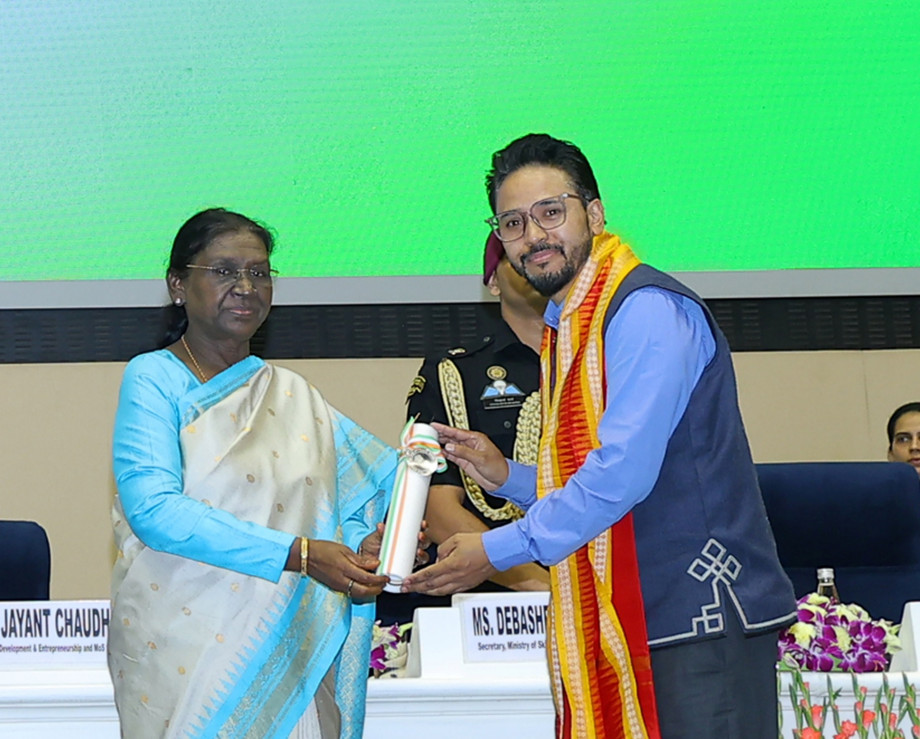
Receiving the National Teachers Award 2026 is a moment of immense happiness and humility. When I began teaching in 2011, I could never have imagined that my work at a rural school in Kargil would receive national recognition.
This moment is particularly emotional because my beloved father, Haji Mohammad Ali, supported me throughout my journey. He witnessed me receiving the Ladakh State Award in Teaching and Academics 2021, conferred on Republic Day in 2022, and later saw me receive this national honour from the President of India. The pride and happiness in his eyes during those moments are difficult to express in words.
If my mother were alive, I believe she would have been among the happiest people to see me reach this stage. Her absence is deeply felt, even amid this joy. These recognitions have strengthened my sense of responsibility. They are not merely honours; they remind me to work with even greater sincerity for the children, teachers and communities of Ladakh.
I see this award primarily as recognition of my work as a schoolteacher, particularly at Government Model Middle School Grong Pashkum between 2021 and 2026. It also reminds me that educational improvement is never the work of one person alone. My students, colleagues, parents, School Management Committee, local community and other supporters have all been part of this journey.
The Cave Museum Class, educational games, Classroom Parliament, field-based learning and other activities grew out of my desire to make Social Science more interesting and relevant to students. Alongside classroom teaching, I also contributed to teacher training, curriculum-related work and the development of educational resources. I am grateful for this recognition, but I see it as encouragement rather than a destination. There is still much to learn and much more to do.
Having joined the School Education Department as a Lecturer in History, I hope to share my classroom experiences, support fellow teachers and encourage more engaging approaches to learning. I would particularly like to see more teachers use local materials, community knowledge and simple activity-based methods, including STEM projects that connect science and mathematics with local history, society, the environment, crafts and the arts.
I also hope that successful practices developed in one school can be shared with others and adapted to their specific needs. Every school has its own strengths and challenges, so we must learn from one another rather than assume that a single approach will work everywhere.
For me, the greatest reward will always be seeing children become more confident, curious and capable learners. This award has strengthened my resolve to continue working towards that goal and contribute meaningfully to the future of education in Ladakh.
I would like to express my sincere gratitude to Bhanu Prabha, IAS, Secretary, School Education; Tsering Paldan, JKAS, Director, School Education; Sonam Wangchuk, Chief Education Officer, Kargil; Khurshida Banoo, Principal, DIET Kargil; and the Zonal Education Officer, Shargole, for their guidance, support and encouragement.
I am equally thankful to the Head Teacher and staff of Government Model Middle School, Grong Pashkum, and the members of the School Management Committee (SMC), Pashkum, for their cooperation and collective efforts throughout my tenure.
I also extend my sincere gratitude to the Chief Education Officer, Leh, and the Principal, DIET Leh, for the trust and confidence they placed in me during the state-level selection round.
The encouragement, cooperation and support of all these individuals and institutions have been invaluable to my journey. I remain deeply grateful to each of them for their contribution and goodwill.
Q. If you could bring one major change to Ladakh’s education system, what would it be, and how would it benefit students?
I would like to see experiential, interdisciplinary and locally connected learning further encouraged across our schools, alongside the continued professional development of teachers. This should include a strong STEM initiative that works alongside social sciences and the arts rather than treating them as separate subjects.
Ladakh itself is a rich learning resource. Its mountains, glaciers, historical sites, traditional livelihoods, agriculture, architecture, oral histories and cultural practices offer countless opportunities for students to understand subjects through real-life experiences.
A Geography lesson can explore the local landscape and changing glaciers, while a History lesson can begin with an old object, a local story or a conversation with an elderly community member. Students can explore democratic values through a Classroom Parliament or understand difficult concepts through educational games. They can measure snowfall, study water conservation, examine traditional building techniques, document local biodiversity, investigate energy use and design solutions to community problems. They can present their findings through maps, models, exhibitions, theatre, painting, storytelling or digital media.
In this way, STEM can complement social sciences and the arts. Science and mathematics help students understand evidence and patterns; social sciences help them examine people, institutions, history and ethical questions; and the arts help them imagine, communicate and interpret what they learn.
These activities would not replace textbooks but help children understand what they read and connect it with the world around them. To make this approach part of everyday learning, teachers need opportunities to plan together, exchange ideas, receive training and develop suitable materials. Schools also need appropriate support and an assessment system that values understanding, creativity and the practical application of knowledge.
Children should feel that learning does not happen only within four classroom walls. Their surroundings can also be a classroom if they are encouraged to observe carefully, ask questions and think critically. Making this approach part of everyday school life would deepen students’ understanding, build their confidence in self-expression and strengthen their connection with their communities. It would also prepare them to understand the wider world and apply their knowledge creatively to address real-life challenges.
Message to the Readers
To students, believe in yourselves and never limit your dreams. To teachers, make learning engaging, practical and connected to Ladakh’s rich heritage. To parents, your encouragement and involvement matter. Together, let us ensure every child feels valued, discovers their potential and builds a brighter future.
-
 Reach Ladakh Skara Yokma, Airport Road, Near Councillor Quarter, India.


© 2018 Reachladakh. All rights reserved.
Web designs By : India Internet